
 ChatGPT
  Gemini
  Claude
  Perplexity
Your taxi quote is 5x what the locals pay. The driver won’t use the meter. Every journey feels like a negotiation—and you never know if you’re winning or getting taken. Here’s the exact system that works.
Understanding Meterless Taxi Markets
Why Meters Exist (Or Don’t)
- Meters exist: But taxi drivers avoid turning them on—or they “don’t work”
- Why: Drivers make more money on negotiation than meter rates
- Your advantage: Your willingness to negotiate sets market
The Geography
| City | Meter Status | Starting Point |
|---|---|---|
| Bangkok | Exists, most avoid | 15-20 THB |
| Hanoi | Doesn’t exist | 15,000-20,000 VND |
| Nairobi | Exists, some avoid | 200-300 KES |
| Cape Town | Exists, usually works | 30-40 ZAR |
| Lagos | Doesn’t exist | 500-1000 NGN |
| Jakarta | Doesn’t exist | 25,000-40,000 IDR |
The Bargaining System
Step 1: The Opening
What NOT to do:
- Don’t accept first quote
- Don’t look excited about destination
- Don’t show you know the city
What TO do:
- Hear the first quote without reaction (don’t flinch)
- Note the number for comparison
Step 2: The Counter
The script:
- Driver: “[High quote]”
- You: “[Half of your target number]” (Start at 40-50% of what you intend to pay)
- Example: They say 500 baht → You say 200 baht
This is the standard system locally. Drivers expect you to counter.
Step 3: The Walk-Away
This is the most powerful tool.
If they won’t meet your price:
- “Okay, I’ll find another” and start walking
- They call you back or they don’t—they want the fare if they call back
- If no return, the price was wrong for this driver
Step 4: The Settlement
Common outcome: 60-70% of original ask is fair for tourists
- They start: 500
- You counter: 200
- They meet: 350
- Final: 300-350 (60-70%) — Fair
City-Specific Scripts
Bangkok
Starting price knowledge:
- Short (2-4km): 50-80 THB
- Medium (4-8km): 80-150 THB
- Long (10km+): 150-300 THB
The script:
- Driver: “150 baht”
- You: “50 baht”
- They may: “No, 100 baht”
- You: “Okay, 70” → 80 is fair
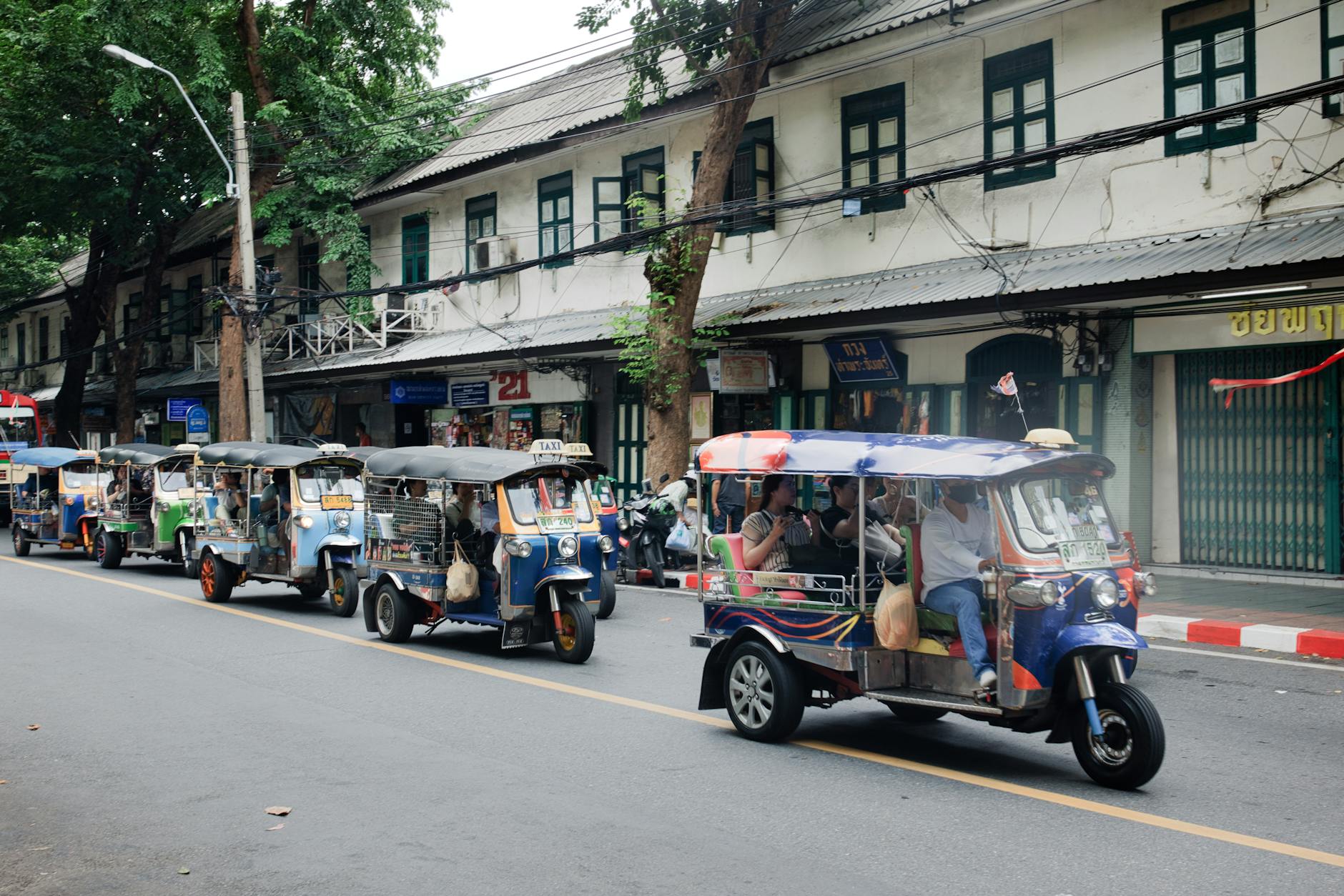
Meter option: “Meter?” (meter kha/ka?) if they turn it on, use it.
Meter option: “Meter?” (meter kha/ka?) if they turn it on, use it.
Hanoi
Starting price knowledge:
- Short (2km): 20,000 VND
- Medium (5km): 50,000 VND
- Long (10km): 100,000 VND
The script:
- Driver: “80,000”
- You: “40,000”
- They come back: “60,000” → Acceptable
- If motorbike: Lower by 30%
Nairobi
Starting price knowledge:
- Short: 200 KES
- Medium: 300-400 KES
- Long: 500-700 KES
The script:
- Driver: “500”
- You: “200”
- Return: “350” → Fair
Uber or Little: Use for price reference, works in Nairobi
Cape Town
Better option: Uber works extensively in Cape Town.
- Uber: Usually under meter rate
- Meter taxi: Available at taxi ranks
When meterless:
- Short: 30-40 ZAR
- Medium: 50-80 ZAR
- Long: 100-150 ZAR
App Alternatives
| City | App | Notes |
|---|---|---|
| Bangkok | Grab | Meter price, works everywhere |
| Hanoi | Grab | Limited |
| Nairobi | Uber, Little | Little cheaper |
| Cape Town | Uber | Widely available |
| Jakarta | GoJek | Meter option |
App prices are fair and known in advance. Always compare app vs. negotiation.
Quick Reference
| City | Fair Short | Using |
|---|---|---|
| Bangkok | 50-80 THB | Counter, Grab app |
| Hanoi | 20,000 VND | Counter |
| Nairobi | 200-300 KES | Little app |
| Cape Town | 30-40 ZAR | Uber |
Bottom Line
Negotiated taxi fares are normal, not confrontation. Everyone expects counter-offers—it’s how the system works. Start at 40-50% of your target price, expect 60-70% settlement. Apps provide fair price reference.
Your checklist:
- Check app for fare estimate first
- Counter with 40-50% of target instead of accepting
- Walk away if price too high
- Settle at 60-70% of opening
- Have exact cash to avoid “no change” issues
Related Articles
Suvarnabhumi Airport Hacks: From 'Golden Land' to City in 45 Minutes
Navigate Suvarnabhumi Airport (BKK) in Bangkok with ease. This comprehensive guide covers arrivals, departures, transportation, facilities, and essential tips for a smooth journey.
The Bangkok MRT Rules Tourists Keep Breaking (Without Knowing)
Master Bangkok's MRT with our etiquette guide. Learn queueing rules, seat etiquette, noise policies, and rush hour tips for a smooth, respectful ride.

Best Thailand eSIM for Tourists in 2026: AIS vs dtac vs TrueMove H, Compared and Priced
Skip the airport kiosk queue. Compare AIS, dtac and TrueMove H tourist eSIMs with 2026 prices, then see when a Klook, Airalo or Saily eSIM beats the carriers on cost — plus exact install steps to do before you fly.
Chao Phraya Express Boat Fares Reduced by One Baht from 1 May 2026
All Chao Phraya Express Boat services in Bangkok and Nonthaburi will drop by 1 baht starting 1 May 2026 due to lower diesel prices. Full updated fare table, routes affected, and how to plan your trip with accurate offline information.