
 ChatGPT
  Gemini
  Claude
  Perplexity
 Landing in Bangkok with no working data is the fastest way to lose your first day in Thailand — no Grab, no Google Maps, no hotel address to show a taxi driver. And the airport SIM kiosks at Suvarnabhumi can mean 20–40 minutes in line after an 11-hour flight.
A Thailand eSIM fixes this if you buy and install it before you fly. The catch: between AIS, dtac, TrueMove H and a wall of marketplace eSIMs (Klook, Airalo, Saily, Holafly), prices for near-identical plans range from about $3 to $50. This guide sorts it out.
Last updated: September 20, 2026. Prices verified against carrier and marketplace listings at time of writing — always double-check before purchase, as tourist plan pricing changes frequently.
Quick Answer: Which eSIM for Which Trip?
| Your trip | Best pick | Why |
|---|---|---|
| 1 week in Bangkok / Phuket, moderate use | Klook eSIM (dtac network) | ~$5–8 for large data allowances, cheapest per GB |
| Island hopping (Samui, Phi Phi, Lanta) | AIS eSIM | Strongest rural and island coverage |
| 2 weeks, heavy data (streaming, hotspot) | AIS Tourist Infinite or Holafly | Unlimited data, no topping up |
| Short trip, want to keep your WhatsApp number | Airalo or Saily | Data-only eSIM keeps your home number active |
| Multi-country trip (Thailand + Malaysia + more) | Airalo regional Asia eSIM | One eSIM covers the whole trip |
| Staying 30+ days | True-dtac Tourist Infinite (30/60 days) | Cheapest unlimited long-stay rate |
The Three Thai Carriers, Explained
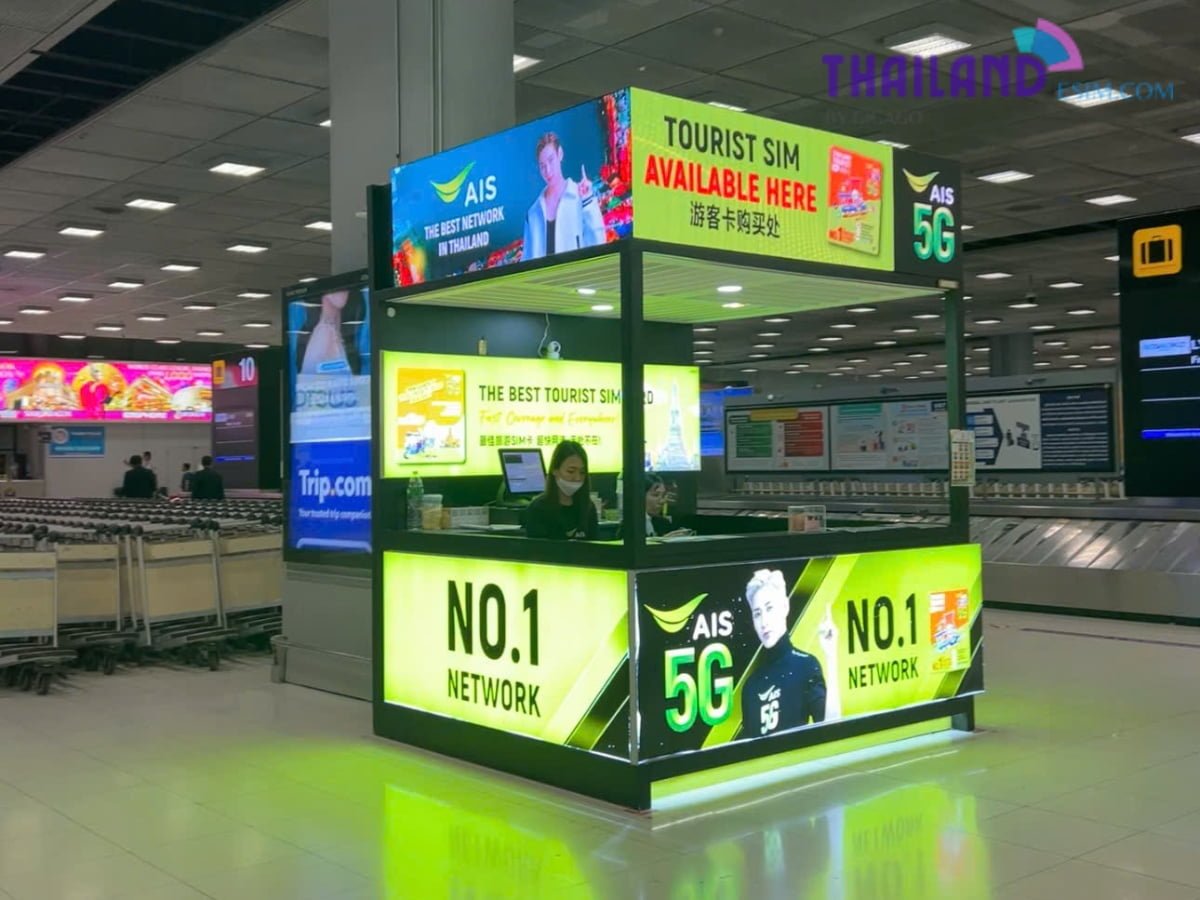
Thailand has three major mobile brands — but since 2023, effectively two networks. dtac and TrueMove H merged into True Corporation, so their tourist plans are sold under a combined “True-dtac” brand while the original network brands remain in use. AIS (Advanced Info Service) remains the largest independent operator.
AIS (Advanced Info Service)
- Coverage: The widest in Thailand. This is the network that works on Koh Lanta, in the Isaan rice belt, and on mountain roads in Chiang Rai — not just in malls.
- 5G: Extensive 5G rollout in Bangkok, Chiang Mai, Phuket, Pattaya and provincial capitals.
- Speed: Consistently tops Thai network tests for overall coverage and consistency.
- Tourist eSIM (“Tourist Infinite”): Unlimited data + unlimited in-Thailand calls — ฿499 / 8 days, ฿699 / 15 days, ฿1,199 / 30 days, ฿1,599 / 60 days (5G/4G, fair-use throttling after the daily full-speed allowance).
- Best for: Islands, road trips, northern Thailand, anyone leaving the big cities.
dtac (now True-dtac)
- Coverage: Strong in cities and tourist corridors; historically weaker than AIS in remote areas, though the True merger keeps closing that gap.
- Tourist eSIM: The classic dtac Happy Tourist plan — around ฿299 for 8 days with unlimited internet and a special international calling rate — remains one of the cheapest official unlimited tourist options.
- Best for: Budget travelers on city-and-beach routes, people who call home a lot (cheap 00400 international rates).
TrueMove H (now True-dtac)
- Coverage: Excellent in Bangkok and urban areas, where its 5G network is arguably the fastest in the country. Thinner outside them.
- Tourist eSIM: True-dtac “Tourist Infinite” plans mirror AIS pricing (8 days ฿499, 15 days ฿699, 30 days ฿1,199) and include unlimited calls plus ฿100 international credit. Budget option: a 7-day plan around ฿219 with 15 GB at full speed, then throttled to 1 Mbps.
- Best for: Bangkok-centric trips where raw 5G speed matters most.
The one-line network verdict
City → dtac/TrueMove H is fine (and often cheaper). Islands and countryside → AIS. If your trip mixes both and budget isn’t tight, AIS is the safest single choice.
Carrier-Direct vs Marketplace eSIMs
You don’t have to buy from the carrier itself. Marketplaces resell plans on the same networks, often for less — trading away a Thai phone number in the process.
| Provider | Example plan (2026) | Approx. price | Network | Thai number? | Notes |
|---|---|---|---|---|---|
| AIS direct | 8 days unlimited | ฿499 (~$15) | AIS | Yes | Official, buy at kiosk or online |
| True-dtac direct | 8 days unlimited | ฿499 (~$15) | True/dtac | Yes | ฿100 int’l call credit included |
| dtac Happy Tourist | 8 days unlimited | ฿299 (~$9) | dtac | Yes | Cheapest official unlimited |
| Klook eSIM | 10–30 GB, 7–15 days | $5–8 | dtac (some AIS) | No (data-only) | Instant QR code, hotspot allowed |
| Airalo | 10 GB / 7 days | $10 | dtac/AIS | No | Easy app, good multi-country options |
| Saily | 1 GB / 7 days | $2.99 | dtac | No | Cheapest entry plan, no-frills |
| Holafly | Unlimited / 7 days | ~$27.50 | AIS/True | No | Priciest per day; simple unlimited |
Marketplace prices fluctuate with promotions; figures are indicative for September 2026.
The pattern is clear: data-only marketplace eSIMs cost roughly half of what the carriers charge, because you’re not paying for a Thai phone number or voice minutes. If you plan to make local calls (tour companies, hotels), a carrier eSIM with a real Thai number is worth it. If your trip runs on WhatsApp, LINE and Grab — like most tourist trips do — a data-only eSIM is the better deal.
Our Pick: Klook’s Thailand eSIM
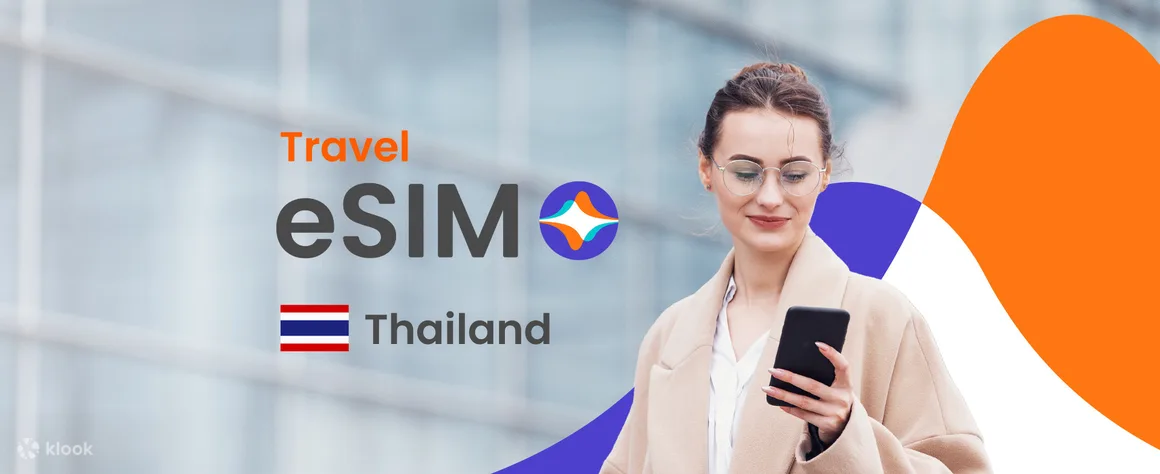
We use and recommend Klook’s Thailand eSIM for most short trips — it runs on the dtac network, delivers the QR code instantly by email, supports hotspot sharing, and at US$5–8 for large data bundles it undercuts every carrier-direct plan:
Browsing eSIM options alongside transport, activities and other arrival essentials? The MestoGo Thailand app pulls connectivity deals into one SIM/eSIM connectivity page so you can compare without tab-hopping.
How to Install Your eSIM Before You Land
Do this at home, on Wi-Fi — not in the arrivals hall:
- Buy the eSIM (Klook, Airalo, Saily, or the carrier’s website) and wait for the QR code by email or in-app.
- iOS: Settings → Cellular → Add eSIM → scan the QR code. Android: Settings → Network & Internet → SIMs → Add eSIM.
- Label it “Thailand” so you don’t confuse it with your home SIM.
- Turn “Data Roaming” ON for the eSIM line — this is the step people miss. Roaming toggles per-SIM; your Thai eSIM counts as roaming even while physically in Thailand. Your home SIM stays on so calls and SMS still arrive.
- Set the Thai eSIM as your default data line once in Thailand (or on landing, when the network registers).
- On landing, toggle the eSIM line on and give it 1–2 minutes to register on AIS/dtac/True.
Install ≠ activate. Installing the eSIM at home is safe — the plan’s validity clock starts when it first connects to a Thai network, not when you scan the QR code (with most providers; check your plan’s terms).
Keeping Your WhatsApp and Home Number
This is the most common anxiety, and the answer is simple: eSIMs don’t replace your number — they add a second line.
- Keep your home SIM physically in the phone and switched on for calls/SMS. It just won’t use data (disable data roaming on that line to avoid roaming charges).
- WhatsApp, LINE, Telegram and banking apps are tied to your phone number, not your SIM slot — they keep working exactly as before over the Thai eSIM’s data.
- Verify SMS codes (bank OTPs, etc.) arrive on your home line as usual.
- The only thing you lose with data-only eSIMs is a Thai phone number for receiving local calls. Thai businesses rarely call tourists anyway.
Regional Advice: Where Each Network Wins

Thailand’s geography genuinely changes the answer:
- Bangkok: All three networks are excellent; TrueMove H’s 5G is often the fastest. Underground MRT/BTS stations now have coverage on all networks. Pick whatever’s cheapest.
- Phuket, Pattaya, Chiang Mai: Fully covered by everything; choose on price.
- Koh Samui, Koh Phi Phi, Koh Lanta, Koh Chang: AIS generally holds a signal further out on the islands and on the ferry routes. dtac/True is fine in the main towns (Chaweng, Tonsai) but can drop on the quiet side of an island.
- Northern mountains (Chiang Rai, Mae Hong Son loop, Pai): AIS leads; expect dead zones on any network on the mountain roads — download offline maps regardless.
- Island-hopping week: Get AIS. The price premium over marketplace dtac plans (~$7 more) buys reliability exactly where you’re most likely to need it.
Common Mistakes That Cost Travelers Money
- Buying airport kiosk rates out of habit. The same AIS 8-day plan sold online costs less than at the counter, and marketplace eSIMs undercut both.
- Forgetting the per-SIM data roaming toggle (step 4 above) — the #1 reason “my eSIM doesn’t work.”
- Buying an unlimited plan but hotspotting aggressively. Most “unlimited” tourist plans have fair-use throttling; heavy hotspot use hits the cap fast. If you tether a laptop daily, buy a big fixed-data plan instead.
- Overbuying days. eSIM validity starts on first connection in Thailand. If you land on the 3rd and leave on the 10th, an 8-day plan covers you — don’t pay for 15.
- Assuming your phone supports eSIM. Any iPhone from the XR/XS onward, most post-2019 Google Pixels and Samsung flagships, and recent iPads do. Check before buying — eSIM purchases are often non-refundable once delivered.
- Deleting the eSIM after the QR scan fails. eSIMs can usually only be installed once; if setup fails, contact the provider for a reissue before deleting anything.
Frequently Asked Questions
Is eSIM or a physical SIM better for Thailand? For most tourists, eSIM: you buy before flying, skip the airport queue, and keep your home number. Physical SIMs win only if your phone doesn’t support eSIM, or you want the absolute cheapest local prepaid rates for a very long stay.
How much data do I need in Thailand? Maps, messaging, social and some video: 5–10 GB covers a week comfortably. Streaming or hotspotting: 15–30 GB, or unlimited.
Do Thai eSIMs work with 5G? Yes — current tourist plans from AIS and True-dtac include 5G/4G at no extra cost, and marketplace eSIMs run 4G/5G on their host networks where the plan allows it.
Can I top up or extend a tourist eSIM? Carrier tourist eSIMs can be topped up via the carrier’s app (AIS: myAIS app; True-dtac: TrueMoney/dtac app). Marketplace eSIMs typically cannot be extended — you’d buy a second one.
Will my eSIM work in Laos, Cambodia or Malaysia? No — a Thailand-only eSIM stops at the border. For multi-country trips, buy a regional Asia eSIM (Airalo’s Asia plans start around $4) instead of a Thailand-only one.
Plan Your Thailand Connectivity, Then Enjoy the Trip
Once your eSIM is installed and tested at home, arrival day gets simple: land, toggle the line on, call a Grab, go. For everything else on arrival day — visa, airport transport, cash — the MestoGo Thailand app keeps the whole checklist in one place. And if Thailand is one stop on a longer Southeast Asia trip, see our eSIM guide for South Africa, Kenya and Tanzania — or better, compare regional plans before you fly.
Related Articles

Negotiating Taxi Fares in Meterless Cities Across Southeast Asia and Africa
Get fair taxi prices in Bangkok, Hanoi, Nairobi, and Cape Town with these exact bargaining scripts. Simple psychology that lowers prices without confrontation.

Temple Visit Etiquette in Thailand and Indonesia That Locals Actually Respect
Dress properly and behave correctly at Buddhist and Hindu sites with this exact dress code guide. Know what never to do—even if other tourists are doing it.

Your Flight Was Delayed—But Not Because of Weather
FAA controller shortages are causing major delays at NYC, Chicago, and Atlanta hubs . Learn real-time alert setups and rebooking strategies.

AI Travel Planning 2026: How to Use AI Tools for Smarter Trip Planning
Discover how AI is revolutionizing travel planning , from personalized itineraries to real-time assistance, and learn practical ways to leverage these tools for your next adventure.