

 ChatGPT
  Gemini
  Claude
  Perplexity
 Since July 2024, Thailand has had a visa that sounds almost too good: five years of validity, multiple entries, 180 days per stay, and — uniquely — official permission to work from Thailand for an employer or clients outside the country. It is called the Destination Thailand Visa (DTV), and it was built for exactly two kinds of people: remote workers who want a “workation” base in Bangkok or Chiang Mai, and long-term students of Thai soft power — Muay Thai fighters, cooking-class devotees, medical travelers.
Two years in, the picture has gotten more nuanced. Thai language study no longer qualifies as a soft-power activity, consulates have added new paperwork requirements, and the September 2026 cut of visa-exempt stays from 60 days to 30 has quietly made the DTV the best long-stay option for a much wider group of travelers.
This guide covers who qualifies, exactly what documents work, what the visa costs, how the 180-day and extension rules actually function, and the rejection patterns that consulates are applying in 2026.
What the DTV Actually Is
The DTV is a long-term visitor visa — technically its own category, not a Non-Immigrant visa class — launched on 15 July 2024 as part of Thailand’s soft-power tourism push. The headline numbers:
- 5-year validity from the date of issue (not from your first entry — applying early burns validity)
- Multiple entries for the entire validity period
- 180 days per entry, extendable once by a further 180 days
- No re-entry permit needed — leave and come back as often as you like while it is valid, and every fresh entry starts a new 180-day clock
The part that makes the DTV genuinely different from every tourist visa: it explicitly permits remote work for employers and clients located outside Thailand. You cannot work for a Thai company, take Thai clients, or earn Thai-source income — that still requires a work permit. But sitting in a Chiang Mai café writing code for a San Francisco employer, or designing websites for your own overseas clients as a freelancer, is exactly what the visa was designed for.
The Two Qualifying Categories
Every DTV application falls under one of two purposes, and the evidence you need depends entirely on which one you pick.
1. Workation (remote workers, freelancers, remote employees)
You must show that your work is genuinely remote and genuinely foreign-sourced. Consulates accept a combination of:
- Employed remote workers: an employment contract plus a letter from your employer confirming you work remotely and your employer is based outside Thailand.
- Freelancers and business owners: client contracts, a portfolio, business registration documents, or proof of ongoing income from foreign sources.
The key word is evidence. “I’m a freelancer” with nothing behind it is the single most common weak point in rejected applications.
2. Thai Soft Power activities
The official list covers:
- Muay Thai and other sports training
- Thai culinary (cooking) courses
- Cultural and arts training — traditional Thai medicine, crafts, music, and similar
- Medical treatment — for ongoing or serious treatment, with a hospital letter and appointment schedule
For every soft-power category you need a letter of acceptance or enrollment from the school, gym, or hospital, plus proof of payment — a booking confirmation or receipt, not just a website screenshot.
Two cautions here, both from 2025–2026 enforcement:
- Thai language study no longer qualifies. Around late 2025, embassies were instructed to reject language-study applications under the soft-power route. If your plan was to learn Thai on a DTV, the correct instrument is a Non-Immigrant ED visa through your language school instead.
- Short courses get rejected. A two-week cooking class or a one-month Muay Thai camp reads as tourism, not purpose. Enrollments in the 6–12 month range are far safer; several gyms and schools now even refund enrollment fees if your visa is refused.
The Money Requirement: 500,000 THB
Every DTV applicant — workation and soft-power alike — must show 500,000 THB (roughly USD 14,000–16,000) in savings.
The practical details matter:
- Provide bank statements covering the last 3–6 months, with your name and the closing balance visible.
- The funds should look established, not freshly deposited. A lump sum that landed last week is a classic rejection trigger; consulates want to see history and stability.
- Crypto holdings and investment accounts generally do not count. Consulates want a cash savings balance in a bank account, in your name.
You are not spending this money — it just needs to sit there through the application. Most applicants keep it in their home-country bank.
How to Apply
Applications go through the official Thai e-Visa system at thaievisa.go.th, submitted to the embassy or consulate with jurisdiction over your place of residence, or in person at the consulate. Applying to a consulate where you do not live is a common auto-rejection.
The document checklist
- Passport valid at least 6 months, with blank pages
- A passport-style photo
- Bank statement showing the 500,000 THB balance (3–6 months of history)
- Purpose evidence: employer letter and contract (workation) or enrollment letter plus payment receipt (soft power)
- Proof of residence in the consular jurisdiction
New for late 2026: residence proof (and sometimes police clearance)
From 31 August 2026, several posts — the Royal Thai Consulate-General in Los Angeles among them, with reports of wider adoption — require proof of permanent residence or the right to reside in the country where you are applying: a residence card, long-term visa, or equivalent. Some posts are also asking for a police clearance certificate issued within the last 3 months. If you were planning to apply as a third-country national at a convenient consulate, check that consulate’s current checklist before you book anything.
Fees
The standard fee is 5,000 THB (roughly USD 135–150), though the exact local-currency amount varies by post — a handful of consulates charge more. Treat any service charging several times that to “guarantee approval” as what it is: a middleman, not an advantage.
The Rules Once You Have It: 180 Days, Extensions, and Reporting
180 days per entry, extendable to 360
Each entry grants 180 days. You can extend once, by a further 180 days, at any Thai immigration office — file the TM.7 form, pay the 1,900 THB fee, and note that approval is discretionary. That makes 360 days the practical maximum for a single continuous stay.
One widespread myth to kill: the DTV extension is 180 days, not 90. The 90-day figure circulates in blog posts left over from other visa types; official sources are uniform on 180.
Unlimited re-entries — no re-entry permit
Unlike tourist visas, the DTV needs no re-entry permit. Fly out and fly back whenever you like within the five years, and each arrival resets the 180-day clock. This is why DTV holders do not need the visa-run choreography that visa-exempt travelers face.
Do not confuse re-entry freedom with invisibility, though: immigration officers can and do question arrivals whose pattern looks like permanent residence without the right visa, and the TDAC digital arrival card is mandatory on every single entry.
90-day reporting applies to you
Stay longer than 90 consecutive days anywhere in Thailand and 90-day reporting becomes your recurring obligation — online or in person, within a window from 15 days before to 7 days after each due date, with a 2,000 THB fine for missing it. The DTV does not exempt you; if anything, long-stay DTV holders are the reporting system’s most consistent users.
DTV vs 60-Day Exemption vs Tourist Visa
With visa-exempt entries cut from 60 days to 30 days on 15 September 2026, the gap between the DTV and every tourist option has widened sharply. Here is where things stand now:
| Visa exemption | TR tourist visa | DTV | |
|---|---|---|---|
| Stay per entry | 30 days (since 15 Sep 2026) | 60 days | 180 days |
| Extension | +30 days (1,900 THB) | +30 days (1,900 THB) | +180 days (1,900 THB) |
| Max continuous stay | 60 days | 90 days | 360 days |
| Validity | single entry | ~3–6 months | 5 years, multiple entry |
| Re-entry | new entry each time, at officer discretion | re-entry permit needed | unlimited, no permit |
| Remote work allowed | No | No | Yes (foreign employers/clients only) |
| Proof of funds | None | None | 500,000 THB |
| Fee | Free | ~USD 35–50 | 5,000 THB |
The practical takeaway: for stays beyond a few weeks, the DTV’s 5,000 THB fee buys more than a year of potential residence across five years of trips, plus the legal right to keep working. Compare that with stacking 30-day exemptions and explaining yourself at the border each time. If you are weighing the intermediate case — a single 1–2 month trip — see our Southeast Asia visa requirements guide and the visa extension walkthrough.
Why Applications Get Rejected — and How to Fix Them
The rejection patterns in 2026 are consistent enough to list:
- Funds below threshold or freshly deposited. The fix is time, not money: build the 3–6 month statement history before applying.
- Weak remote-work proof. A one-line “I am a freelancer” statement fails. Get a real employer letter, or assemble contracts, invoices, and a portfolio that show ongoing foreign income.
- Short soft-power enrollments. A 1-month course reads as a holiday with a receipt. Six months or longer changes the story.
- Language-study applications — auto-rejected under soft power since late 2025. Switch to the ED visa route.
- Wrong consulate or jurisdiction. Apply where you legally reside, through the official e-visa portal — not through an agent promising shortcuts.
If you are refused, you can reapply with strengthened documents; there is no official waiting period, but fixing the actual weakness matters more than speed. Some Muay Thai gyms and cooking schools will refund enrollment fees on a rejected visa — worth asking before you pay.
FAQ
Can I work for a Thai company on a DTV?
No. The workation category covers remote work for employers and clients outside Thailand only. Working for a Thai company or earning Thai-source income requires a work permit and the appropriate visa.
Do I have to pay Thai tax on a DTV?
Staying 180 days or more in aggregate in a calendar year makes you a Thai tax resident under the Revenue Code, regardless of visa. Since the 2024 rule change, foreign income you remit into Thailand is taxable for tax residents, though Double Tax Agreements can reduce or eliminate double taxation. Many DTV holders deliberately manage their days and remittances around this — it is worth an hour with a tax advisor if you plan to stay the full 360.
Is health insurance required?
Not nationally. Unlike some long-term visa categories, the DTV does not impose a uniform insurance requirement, though individual consulates may ask for evidence of coverage (around USD 50,000 medical is the commonly cited figure) at their discretion. Independent of visa rules, long-stay travelers should carry coverage — Thailand’s private hospitals are excellent and cash-upfront.
Can my family come with me?
Yes. The legal spouse and children under 20 of a DTV holder can apply for a dependent DTV with the same 5-year validity and 180-day stays. You will need marriage and birth certificates.
Is the DTV better than repeating visa exemptions?
For anything beyond a handful of trips, yes — and since September 2026 it is not close. Visa-exempt entries now grant 30 days, are individually subject to officer discretion, and repeated back-to-back exemptions attract scrutiny at immigration. The DTV costs 5,000 THB once and removes all of that friction for five years.
How long does approval take?
The e-visa system typically processes applications within a few business days to two weeks depending on the post, but peak seasons and document queries stretch that. Apply at least a month before your intended departure — and remember the 5-year validity clock starts at issue, so applying many months early trades a fee you would pay anyway for a slice of validity.
The DTV is the most generous long-stay visa Thailand has offered mainstream travelers, but it rewards preparation: documented funds with history, airtight purpose evidence, and an application from the right consulate. Get those three right, and the 5-year “workation” is exactly as good as it sounds.
Related Articles
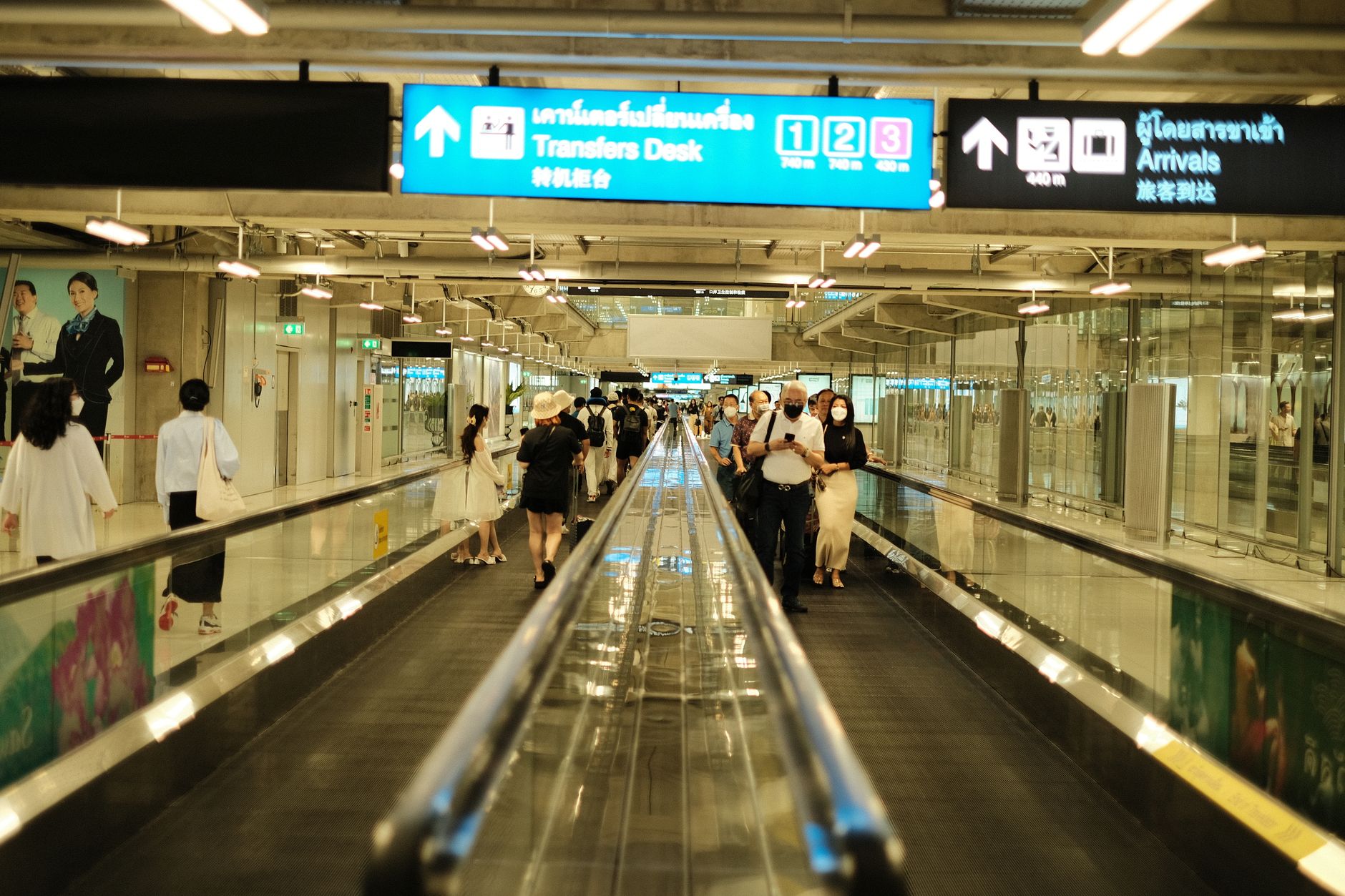
Thailand TDAC: How to Complete the Digital Arrival Card (Free) Without Getting Scammed
Everything you need to know about Thailand's Digital Arrival Card (TDAC): who needs one, when to submit it, how to fill it in step by step, and how to dodge the copycat websites charging for a free form.
Thailand 90-Day Reporting for Tourists: Do You Actually Need It?
A clear June 2026 guide to Thailand’s 90-day reporting rule for tourists and long-stay travelers: who must report, who usually does not, when the 90-day clock matters, and how TM47 works online or in person.
Thailand TM30: The Form That Can Make or Break Your Visa Extension
A clear, no-fluff guide to Thailand’s mandatory TM30 address notification. Who files it, when it’s required, how to submit online or in person, required documents, penalties, and how to avoid common visa and rental headaches.

Africa Visa Overview: Requirements for Safari and Adventure Travel
Complete guide to visa requirements for African safari destinations including Kenya, Tanzania, South Africa, Egypt, Morocco, and more. Essential information for adventure travelers planning their African journey.