
 ChatGPT
  Gemini
  Claude
  Perplexity
 Thailand’s TM30 form is one of the most misunderstood requirements for foreigners. Whether you’re a tourist on a 30-day visa exemption, a digital nomad on the DTV, a retiree, or a long-term expat with a work or marriage visa, the TM30 affects almost everyone who stays overnight outside a hotel.
This guide cuts through the bureaucracy. It explains exactly what the TM30 is, who is legally responsible, when you need it, how to file it without wasting time, and what happens if it’s missed. No hype, no outdated advice—just practical steps that solve real problems.
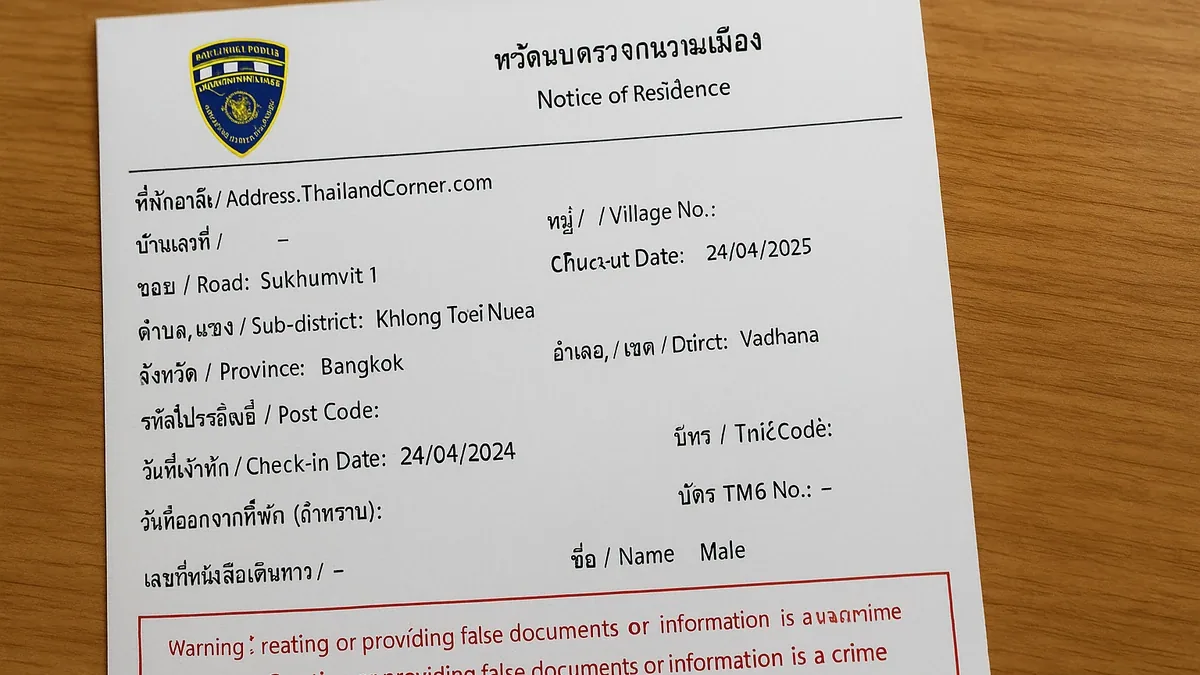
What Is the TM30 and Why Does It Exist?
The TM30 (official name: Notification from House-Master, Owner or the Possessor of the Residence where Alien has Stayed) is Thailand’s official record of where every foreign national is staying. It is required under Section 38 of the Immigration Act B.E. 2522 (1979).
Its purpose is straightforward: Thai authorities use it to track the location of foreigners for security, immigration control, and to prevent overstays. It applies to every non-Thai national staying overnight in Thailand, regardless of visa type.
Hotels and serviced apartments handle this automatically at check-in. The real headaches start with private rentals, condos, houses, or Airbnbs.

Who Is Responsible for Filing the TM30?
- Primary responsibility: The host — landlord, property owner, house master, condominium juristic person (building management), or hotel operator.
- Foreigners are not required to file it themselves but must provide documents and ensure it gets done. Without a valid TM30 receipt, you can face delays or refusals when extending visas, reporting 90 days, or handling other immigration matters.
- Special cases:
- If you own the property, you file for yourself.
- Thai spouses or family can assist but the legal duty still sits with the property owner or authorised manager.
- Short-term Airbnb or private stays still require the owner or authorised agent to file.
Hotels almost always sort this within 24 hours. Private landlords often don’t — or charge extra for the service.
When Must the TM30 Be Submitted?
The rule is simple on paper: within 24 hours of the foreigner’s arrival or start of stay at the address.
Key triggers:
- First arrival at a new property.
- Change of residence (even within the same building).
- Return to Thailand after an international trip (even if returning to the same address).
2020 relaxation rules (still in force): When filing, the host must state the expected arrival and departure dates. No new TM30 is needed for returns to the same address within that stated period. This removed the old requirement to report every single re-entry.
Domestic short trips within the same province usually don’t require a new filing if your main address hasn’t changed. The TM30 is not the same as the separate 90-day reporting (TM47) that foreigners handle themselves.
How to File the TM30: Step-by-Step Options
Three main methods (online is fastest for most people):
-
Online (recommended)
Portal: https://tm30.immigration.go.th
Landlords create an account once, then log in to add foreign guests quickly. The system has improved significantly since the 2023 update and works for most users. -
Section 38 mobile app (iOS/Android) – useful for quick submissions in some areas.
-
In person at the local immigration office (or Immigration Bureau Headquarters in specific cases). Bring all documents; expect queues.
Required documents:
- From the foreigner: Passport copy (photo page + visa page), arrival/departure card number (or TM6 equivalent).
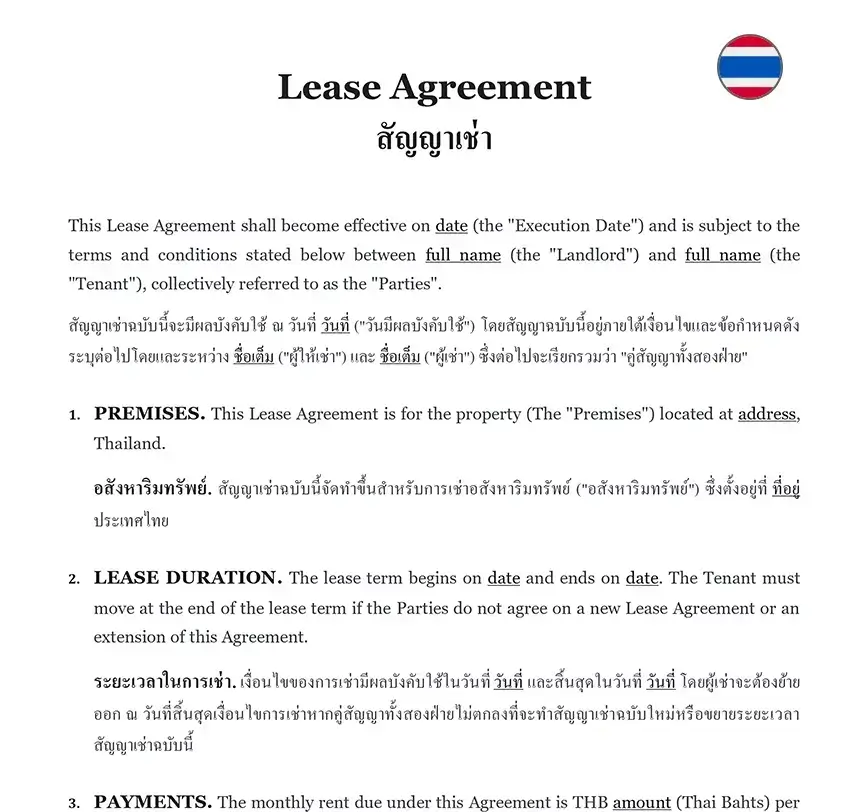
- From the host/landlord: Copy of property title deed or Tabien Baan (blue house book), rental/lease agreement, Thai ID card or passport copy, and a notarised authorisation letter if a manager or proxy is filing.
Successful submission produces a stamped receipt (often a PDF or printed confirmation). Keep both digital and paper copies — immigration offices frequently ask for it.
Foreign property owners can register their own address directly on the portal.

Penalties and Real-World Consequences
Fines for late or missing TM30 fall primarily on the host/landlord and range from 800–2,000 THB per person/incident. In practice, even delayed filings rarely attract the maximum.
For foreigners, the bigger risk is indirect:
- Visa extension delays or refusals.
- Problems with 90-day reports, work permits, or re-entry permits.
- Complications with insurance claims, banking, or official verifications that require proof of address.
Enforcement varies by immigration office. Some are strict; others are more relaxed if the delay is minor.

Common Problems and How Foreigners Get Stuck
- Landlords who “don’t know how” or refuse to file.
- Condo juristic persons that charge 500–1,000 THB extra per filing.
- Lost receipts when you need them for visa runs or extensions.
- Confusion after international travel — does the old TM30 still cover you?
- Online portal access issues for landlords who never created an account.
These issues are especially common outside Bangkok and in tourist-heavy areas like Phuket or Pattaya.
Frequently Asked Questions
Can I file the TM30 myself?
Only if you own the property or the landlord gives you written authorisation (proxy letter).
Do I need a new TM30 every time I leave and return to Thailand?
Under the 2020 rules, no — if the original filing included your full expected stay period. In practice, many landlords file a fresh one on re-entry. Ask your landlord or local immigration office what they expect.
What about short domestic trips or moving between hotels?
Hotels handle their own filings. Short domestic moves within the same main address usually don’t require new paperwork.
Is the TM30 required for every Airbnb or short-term rental?
Yes. The owner or authorised manager must file within 24 hours.
Do I need the receipt for visa extensions?
Many offices now request it or proof that a TM30 exists for your current address. Better to have it.
Has anything changed recently?
The 2020 relaxation remains the key update. The online portal received a major upgrade in 2023 and is now the preferred method. Always check the official immigration website for the latest portal links.
Practical Tips That Actually Work
- Before signing a lease: Ask the landlord explicitly if they will handle TM30 filings and whether they charge extra. Get it in writing.
- On move-in day: Request the TM30 receipt within 48 hours and store it in a dedicated folder (digital + printed).
- For frequent travellers: Confirm with your landlord that they will file on international re-entries if needed.
- If the landlord refuses: Offer to help them register on the online portal or use a visa agent who can file with a proxy (same-day service available in most major cities).
- Keep records: Screenshot every confirmation email or PDF from the portal.
- Property owners: Register your own address on the TM30 portal immediately after purchase or move-in.
- Monitor immigration.go.th for any updates.
Bottom Line
The TM30 is bureaucratic, but it’s not complicated once you know the rules. Proactive landlords and tenants who communicate clearly avoid 99% of problems. For foreigners, the real value of compliance is smoother visa extensions and fewer immigration office headaches.
Always verify the latest requirements directly with your local immigration office or the official portal, as implementation can differ slightly by province. Rules exist for a reason, but practical enforcement is what matters day-to-day.
If you’re moving to Thailand long-term or just planning an extended stay, sorting the TM30 early removes one of the most common friction points in daily expat life.
Related Articles
Thailand DTV Visa 2026: The Complete Guide to the 5-Year 'Workation' Visa (Requirements, Costs & Approval Tips)
Thailand's DTV visa lets remote workers, freelancers, and Muay Thai and cooking students stay 180 days per entry on a 5-year multiple-entry visa. Here is who qualifies, the 500,000 THB proof of funds, how to apply, and why applications get rejected.
Thailand TDAC: How to Complete the Digital Arrival Card (Free) Without Getting Scammed
Everything you need to know about Thailand's Digital Arrival Card (TDAC): who needs one, when to submit it, how to fill it in step by step, and how to dodge the copycat websites charging for a free form.
Thailand 90-Day Reporting for Tourists: Do You Actually Need It?
A clear June 2026 guide to Thailand’s 90-day reporting rule for tourists and long-stay travelers: who must report, who usually does not, when the 90-day clock matters, and how TM47 works online or in person.

The Day Buddha Spoke for the First Time — and How Thailand Still Marks It 2,500 Years Later
Discover Asahna Bucha Day and Khao Phansa, marking the beginning of Buddhist Lent in Thailand. Learn about candle festivals, monk retreats, and how travelers can respectfully participate.