

 ChatGPT
  Gemini
  Claude
  Perplexity
 I still remember my first proper bowl of Som Tum like it was yesterday. I was sweating through my shirt in a humid Bangkok alley off Khao San Road, perched on a plastic stool while a vendor in a faded apron pounded away at a giant clay mortar. One bite and it hit me—sharp lime, salty fish sauce, that slow-building chili heat, and the unmistakable crunch of green papaya. No fancy plating, no Instagram filter needed. Just pure, addictive Thai street food that somehow feels both refreshing and fiery at the same time.
If you’re heading to Thailand anytime soon, Som Tum (also spelled Som Tam) needs to be on your radar. It’s not some passing TikTok trend—it’s a daily staple that’s been holding its own for decades. In recent years, though, it’s popped up even more in global feeds thanks to quick home recipes and market tour videos. Travelers keep discovering it for the same reasons locals never get tired of it: it’s cheap, customizable, and pairs perfectly with everything from grilled chicken to ice-cold beer.
Where It All Started (and Why That Matters)
Som Tum comes from Thailand’s northeastern Isan region, right along the Lao border. The name breaks down simply—“som” for sour, “tum” for the pounding action with the pestle. Lao cooks were making similar pounded salads long before it crossed into Thailand, and you’ll still see overlaps today. Migration and street food culture spread it nationwide, turning it into one of those dishes every Thai person knows by heart.
:max_bytes(150000):strip_icc()/20210928-Som-Tam-Thai-green-papaya-salad-vicky-wasik-24-f0d666fc609f49a0b9f34897bd2c6303.jpg)
What surprises a lot of first-timers is how regional it stays. In Isan markets it leans bolder and funkier. In Bangkok and central Thailand it’s usually the sweeter, more approachable version most foreigners encounter abroad. Either way, it’s never just “papaya salad.” It’s a flavor blueprint for Thai balance: sweet, sour, salty, spicy, all in one bowl.
The Real Ingredients and How They Work Together
At its core, Som Tum Thai—the style you’ll see most often in Bangkok—starts with unripe green papaya shredded into thin strips. That’s the star for texture. Then come:
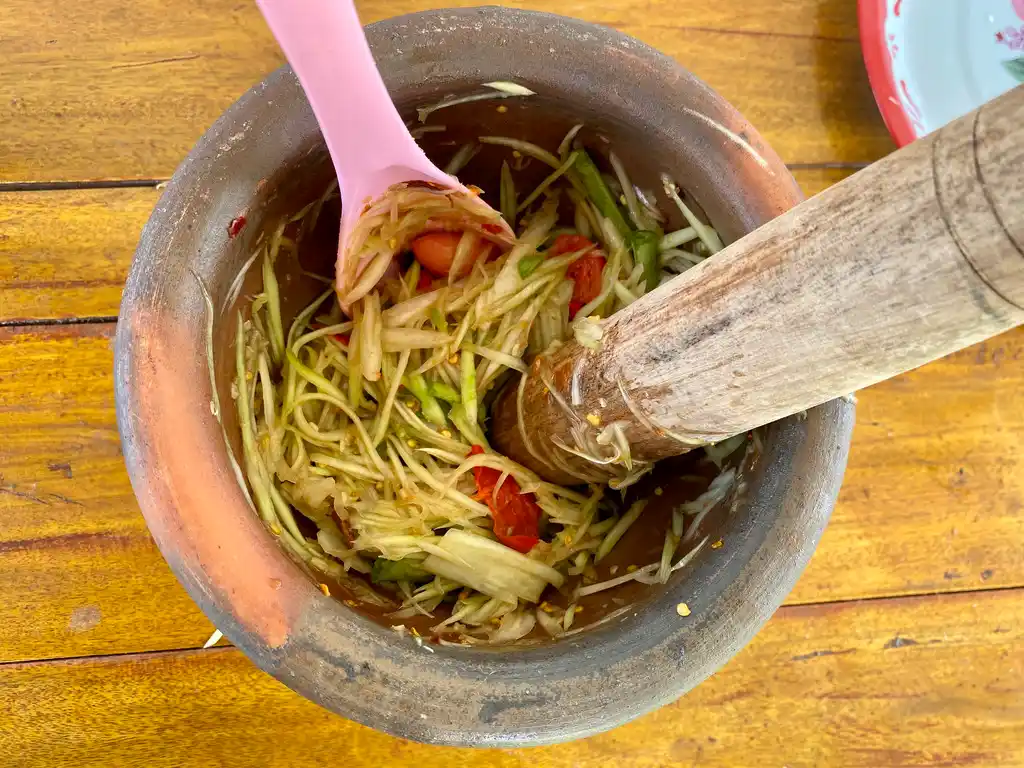
- Fresh bird’s eye chilies (adjustable—more on that later)
- Garlic cloves
- Cherry tomatoes that burst under the pestle
- Long beans snapped into short lengths
- Roasted peanuts for crunch
- Dried shrimp for that savory pop
- Lime juice, fish sauce, and palm sugar for the dressing
The magic happens in the mortar. A quick, gentle pounding bruises everything just enough to release juices without turning it to mush. That’s why the salad tastes fresher and more alive than anything pre-mixed in a bowl.
If you’re in Isan or ordering the Lao-style Som Tum Pla Ra, expect fermented fish sauce instead of the usual dried shrimp. It adds serious umami depth and a smell that some travelers describe as “acquired.” Fair warning: it’s stronger, but many locals swear it’s the real deal.
Vegetarian versions swap fish sauce for soy or salt and skip the shrimp—easy to request. Some stalls even do mango or cucumber swaps when papaya is out of season, though the classic green papaya remains king.
How to Order It Like You Know What You’re Doing
Walk up to any street cart in Bangkok—Chatuchak Weekend Market, Victory Monument, or the night stalls along Sukhumvit—and you’ll see the setup: rows of green papayas, a giant mortar, and a menu board with variations. Point and say “Som Tum Thai” for the standard one. Want it less spicy? “Mai phet” works wonders. Extra sour? “Mak prik” for more lime. Most vendors are happy to tweak on the spot.
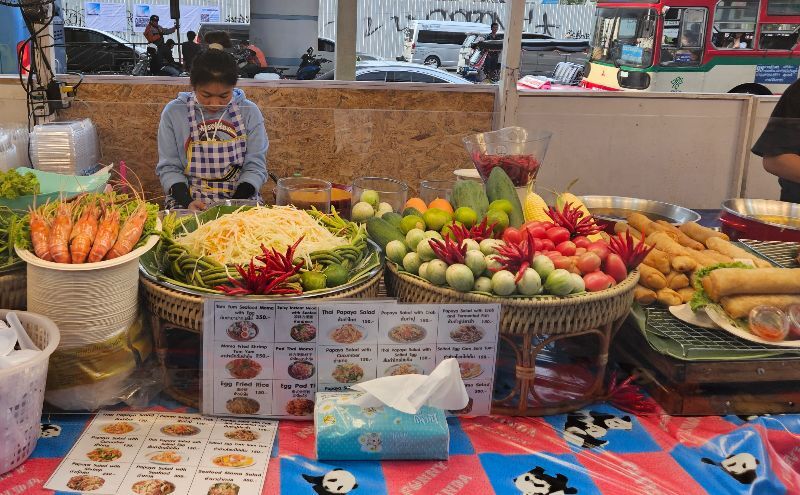
Pro traveler tip: Pair it with sticky rice (khao niao) and grilled chicken (kai yang) or pork skewers. The rice soaks up the dressing that inevitably pools at the bottom of the plate, and the protein balances the heat. One plate of Som Tum plus those sides costs around 60-100 baht—under $3 USD—and keeps you full for hours.
Avoid the tourist traps that serve it pre-made from a fridge. The best versions are pounded to order so the flavors stay bright and the papaya stays crisp.
Making It at Home (Even Without a Thai Market Nearby)
You don’t need to wait for your next trip. Green papaya shows up in Asian supermarkets more often than you’d think, or you can sub with shredded green mango or even firm zucchini in a pinch. Here’s a no-fuss recipe that gets you close to Bangkok stall quality.

Simple Som Tum Thai for Two
Ingredients:
- 2 cups julienned green papaya (about half a small unripe papaya)
- 2-3 garlic cloves
- 2-4 Thai bird’s eye chilies (start low if you’re spice-sensitive)
- 1 tbsp roasted peanuts
- 1 tbsp dried shrimp (optional—skip for vegan)
- 5-6 cherry tomatoes, halved
- 4-5 long beans or green beans, cut into 2-inch pieces
- 2 tbsp fresh lime juice
- 1.5 tbsp fish sauce (or soy sauce + pinch of salt for vegan)
- 1 tbsp palm sugar or brown sugar
Method:
- In a large mortar, lightly pound the garlic and chilies to release their oils.
- Add the long beans and tomatoes—give them a gentle smash so they release juice but stay chunky.
- Toss in the papaya, peanuts, and dried shrimp. Pound lightly while turning with a spoon to mix everything.
- Stir together the lime juice, fish sauce, and sugar until the sugar dissolves, then pour over the salad.
- Use the pestle and a spoon to combine everything for another 30 seconds. Taste and adjust—more lime for sour, more sugar for sweet.
Serve immediately with sticky rice. Total time: under 10 minutes. The key is restraint with the pounding—overdo it and you lose the crunch that makes Som Tum addictive.
Why It Fits Right Into Today’s Travel Habits
In recent years Som Tum has ridden the wave of interest in fresh, vegetable-forward meals that don’t weigh you down. One typical serving clocks in around 120 calories yet delivers serious fiber, vitamin C from the papaya and tomatoes, and that papain enzyme that actually helps digestion—handy after a day of pad thai and mango sticky rice. It’s naturally gluten-free and easy to lighten further.
Street vendors in Bangkok still sell it by the hundreds every evening because it travels well in a to-go container and tastes just as good lukewarm as it does fresh. I’ve eaten it on long bus rides to Ayutthaya and at beachside spots in Phuket—always hits the spot when the heat makes heavy food feel impossible.
A Few Last Practical Notes for Travelers
Spice levels vary wildly by stall and region. If your mouth is on fire, order a side of sticky rice or grab a sweet Thai iced tea—milk and sugar calm things down fast. Watch out for the fermented versions if you have a sensitive stomach; they’re delicious but can be intense.
And if you’re hunting the absolute best versions, head to Isan for a day trip or two. Places around Khon Kaen still do it the old-school way, sometimes with extra local twists like soft-shell crab or pickled eggs that turn the salad into a full meal.
Som Tum isn’t flashy. It doesn’t come with a story about ancient royal recipes or gold leaf on top. It’s just honest, punchy, and impossible to stop eating once you start. Next time you’re wandering a Thai market and hear that rhythmic pounding echoing between the stalls, stop. Point at the papaya. You’ll thank yourself later.
Related Articles
I Stood in Chinatown as a 40-Foot Dragon Weaved Past Me — Here's Why Lunar New Year in Thailand Feels Different From Anywhere Else
Celebrate Chinese New Year in Thailand with vibrant parades, lion dances, and feasts. Discover Bangkok's Chinatown, Phuket's Old Town, and the best Chinese temples for an unforgettable lunar new year.

The Day Buddha Spoke for the First Time — and How Thailand Still Marks It 2,500 Years Later
Discover Asahna Bucha Day and Khao Phansa, marking the beginning of Buddhist Lent in Thailand. Learn about candle festivals, monk retreats, and how travelers can respectfully participate.

Suvarnabhumi Airport Hacks: From 'Golden Land' to City in 45 Minutes
Navigate Suvarnabhumi Airport (BKK) in Bangkok with ease. This comprehensive guide covers arrivals, departures, transportation, facilities, and essential tips for a smooth journey.

The Bangkok MRT Rules Tourists Keep Breaking (Without Knowing)
Master Bangkok's MRT with our etiquette guide. Learn queueing rules, seat etiquette, noise policies, and rush hour tips for a smooth, respectful ride.