
 ChatGPT
  Gemini
  Claude
  Perplexity
 The Perfume Pagoda Festival (Hội Chùa Hương) is Vietnam’s longest and most significant Buddhist pilgrimage, drawing hundreds of thousands of devotees and curious travelers each year to the sacred Huong Tich mountains southwest of Hanoi. Spanning three months from late winter through spring, this ancient festival combines breathtaking natural scenery with profound spiritual traditions that have continued for over 400 years.
The pilgrimage journey takes visitors through limestone karst mountains, along tranquil rivers, past ancient pagodas, and finally to the Perfume Pagoda itself — a series of temples carved into a massive cave believed to be one of Vietnam’s most sacred Buddhist sites. For Buddhists, this journey is an act of devotion that brings merit and blessings for the coming year. For travelers, it offers a rare glimpse into Vietnam’s religious heritage and the chance to witness age-old rituals performed in one of the country’s most spectacular natural settings.
This comprehensive guide covers everything you need to know about the Perfume Pagoda Festival 2026: its history and spiritual significance, practical logistics, the complete pilgrimage route, tips for visiting, and how to experience this unique blend of natural beauty and religious devotion.
What is the Perfume Pagoda Festival?
The Sacred Buddhist Pilgrimage
The Perfume Pagoda Festival is a three-month Buddhist pilgrimage that takes place annually at the Huong Tich (Perfume Grotto) complex, approximately 60 kilometers southwest of Hanoi. The festival begins in early spring, typically in the first lunar month (usually February or March), and continues through the third lunar month (April or May), with the peak pilgrimage period occurring in the second lunar month.
The festival celebrates Buddha’s birthday and honors Avalokiteshvara, the Bodhisattva of Compassion, who is believed to have appeared in this mountainous region. Pilgrims believe that making this journey and offering prayers at the Perfume Pagoda will bring luck, prosperity, and spiritual benefits for the coming year.
Why “Perfume”?
The name “Chùa Hương” (Perfume Pagoda) comes from the fragrant aroma that emanates from the thousands of sandalwood incense sticks burning in the caves and temples, combined with the natural scents of the forest and flowers blooming in springtime. The entire Huong Tich mountain range is known for its spiritual atmosphere and natural beauty.
Historical Significance
The Perfume Pagoda complex dates back to the 15th century, though Buddhist worship in the area likely began much earlier. The festival itself has been celebrated continuously for over 400 years, surviving wars, political changes, and modernization. Today, it represents one of Vietnam’s most important living religious traditions.
Perfume Pagoda Festival Dates 2026
Official Festival Period
- Festival Start: Early February 2026 (First lunar month)
- Peak Period: March 2026 (Second lunar month)
- Festival End: Late April 2026 (Third lunar month)
Best Times to Visit
- February: Less crowded, cooler weather, quieter spiritual atmosphere
- March (Peak): Maximum cultural experience, larger crowds, more elaborate ceremonies
- April: Warmer weather, fewer crowds, lush spring scenery
2026 Lunar Calendar Note
Exact dates vary by lunar calendar calculations, but the festival typically runs from late January/early February through late April. For 2026, expect the main pilgrimage period to be concentrated in March, when religious significance, weather conditions, and cultural activities align.
Travel Tip: If you want to experience the festival at its peak while avoiding the largest crowds, plan your visit for a weekday in mid-March. Weekends, especially during the peak period, can be overwhelmingly crowded with thousands of pilgrims.
The Pilgrimage Route: Step by Step
The complete pilgrimage to the Perfume Pagoda involves several stages, each offering unique experiences and spiritual significance.
Stage 1: Hanoi to Ben Duc Pier
Transportation:
- Private Tour: Most convenient option (2-hour drive each way)
- Public Bus: Take bus to My Duc district, then motorbike to Ben Duc
- Group Tour: Available from Hanoi tour operators
Starting Point: The pilgrimage officially begins at Ben Duc pier, the main gateway to the Perfume Pagoda complex. Here, you’ll join hundreds of pilgrims boarding wooden boats for the river journey.
Stage 2: Yen River Boat Journey
Duration: 45–60 minutes each way
The boat journey along the Yen River is one of the festival’s most memorable experiences. Traditional sampans rowed by local women carry pilgrims past rice paddies, limestone karsts, and rural villages. The river is typically crowded with boats during peak festival times, creating a colorful and festive atmosphere.
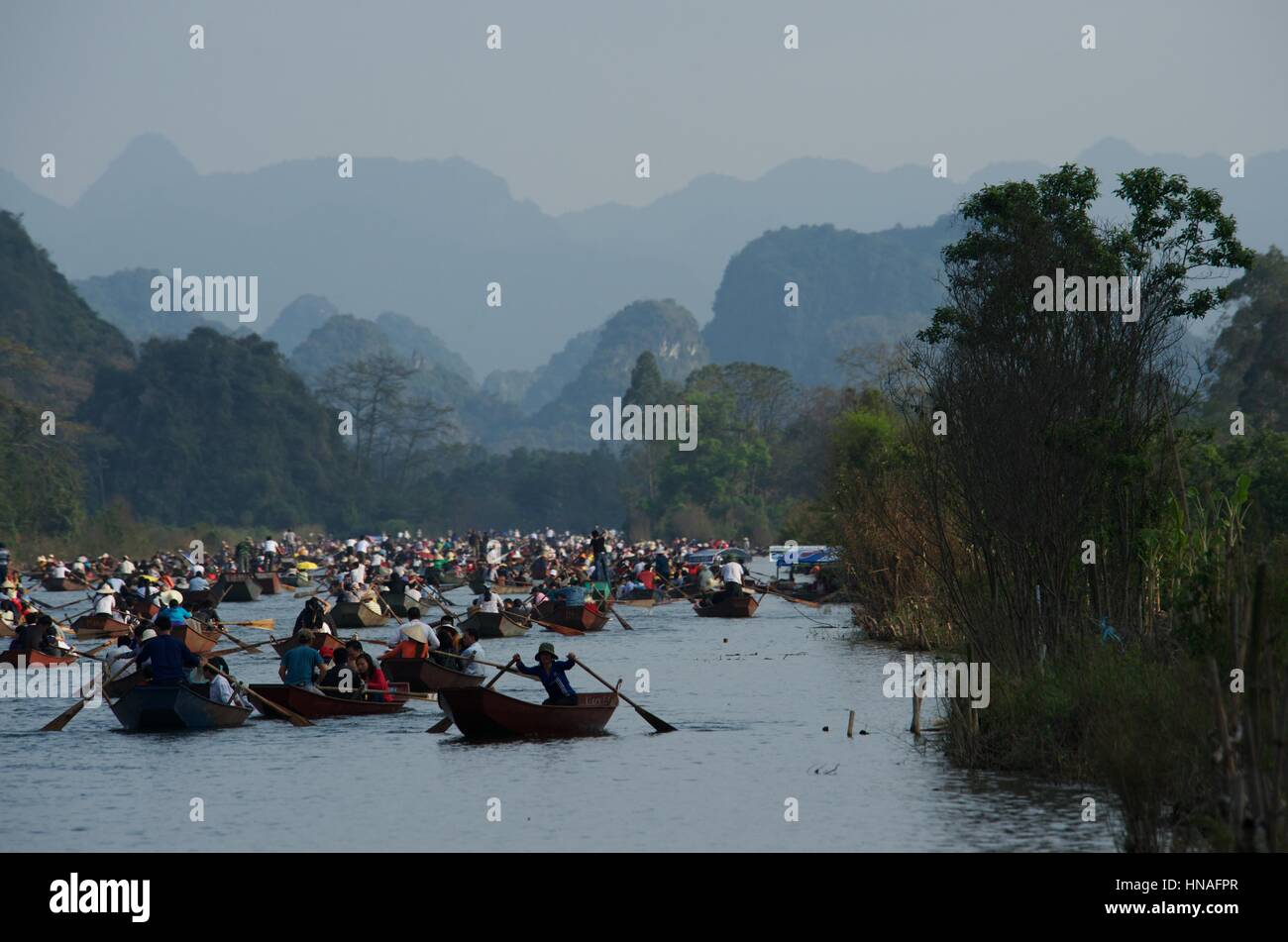
Highlights:
- Scenic rural landscapes and limestone mountains
- Traditional sampans and rowing women
- First views of pagodas in the distance
- Spiritual anticipation building among pilgrims
Cost: Boat rental is typically 150,000–200,000 VND per boat (seats up to 4 people), round trip.
Stage 3: Yen Vi Pagoda (First Temple)
Distance: 10-minute walk from boat landing
The first major stop is Yen Vi Pagoda, where pilgrims typically light incense and offer prayers before continuing the ascent. This temple serves as a spiritual preparation point, where devotees set their intentions for the pilgrimage.
Activities:
- Light incense and make offerings
- Observe traditional rituals
- Purchase prayer items for the journey ahead
- Rest before the hike begins
Stage 4: The Mountain Ascent
Distance: Approximately 3 kilometers uphill Duration: 2–3 hours hiking (one way) Alternative: Cable car available for most of the journey
The ascent to the Perfume Pagoda involves a steep hike through mountain passes and past several smaller temples along the way. For many pilgrims, this physical challenge is part of the spiritual journey, representing the effort required to achieve enlightenment.
Temples Along the Way:
- Thien Tru Pagoda: Temple of Celestial Kitchen, serving as a rest stop
- ** Giai Oan Pagoda:** Temple of Exoneration, where pilgrims pray to be absolved of sins
- Huong Tich Cave: The final destination, containing the main shrine
Cable Car Option: For those who cannot or prefer not to hike, a cable car system covers most of the ascent, reducing walking time to about 30 minutes each way. The cable car offers spectacular views but bypasses several smaller temples.
Cost: Cable car round trip is approximately 120,000–150,000 VND.
Stage 5: Huong Tich Cave (Perfume Grotto)
Duration: 1–2 hours at the cave
The journey culminates at Huong Tich Cave, the spiritual heart of the festival. This massive limestone cave houses the main shrine and is considered one of Vietnam’s most sacred Buddhist sites. Inside, the air is thick with incense smoke, and pilgrims offer prayers, light candles, and make donations.
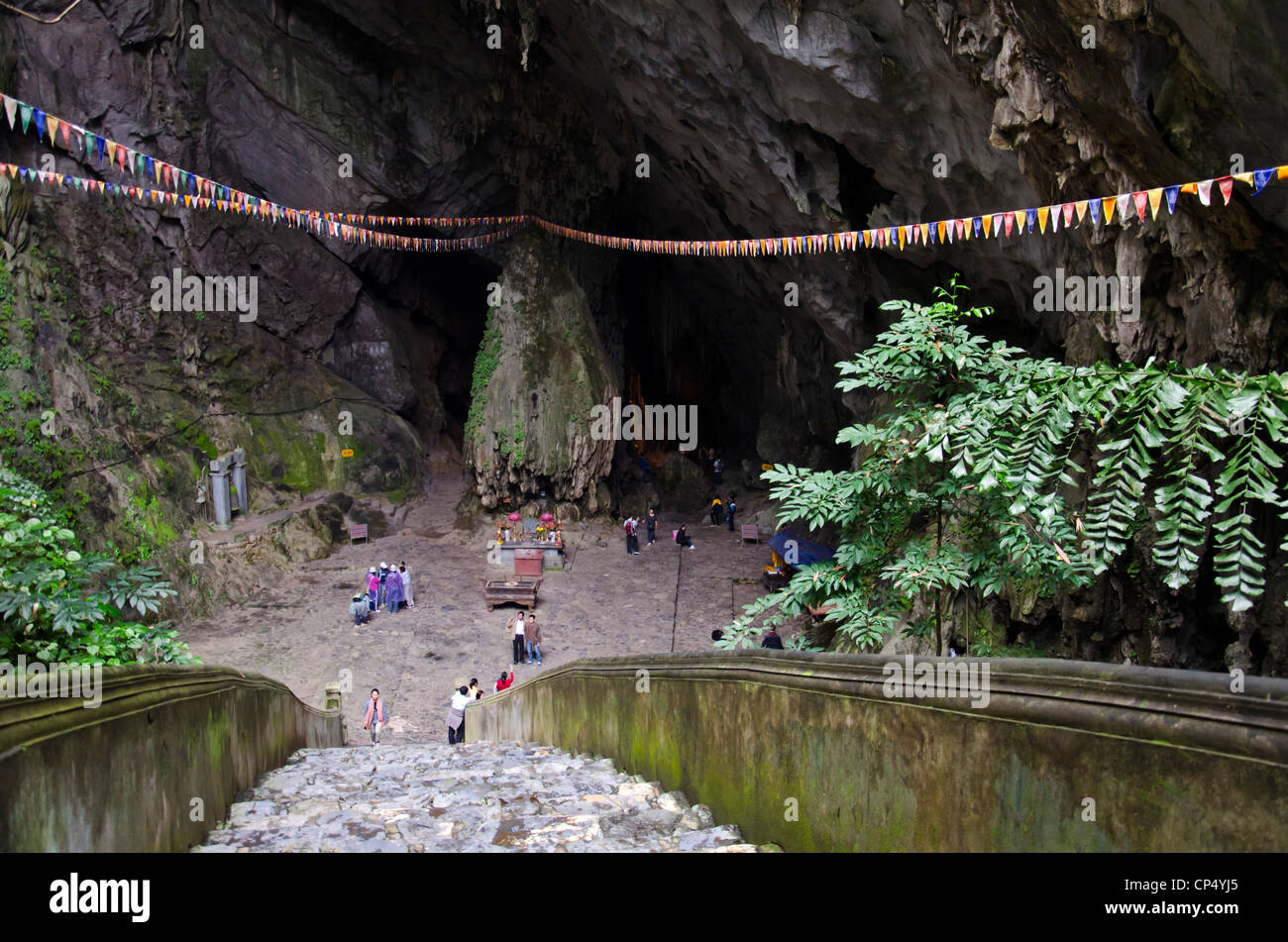
Key Features:
- Main Shrine: Statue of Avalokiteshvara, the Bodhisattva of Compassion
- Natural Rock Formations: Resembling Buddhist deities and symbols
- Thousands of Incense Sticks: Creating a thick, fragrant atmosphere
- Pilgrim Offerings: Flowers, fruit, and monetary donations
Spiritual Significance: Many pilgrims believe that prayers made in this cave are especially powerful and will be granted. Devotees often come with specific requests for health, prosperity, family welfare, or spiritual advancement.
Stage 6: The Descent and Return
Duration: 2–3 hours descent + boat journey back
The descent provides a different perspective on the pilgrimage route and allows pilgrims to reflect on their experience. Most pilgrims stop briefly at temples they may have rushed past on the way up, offering final prayers before beginning the journey home.
Return Boat Journey: The boat ride back is typically quieter and more relaxed than the morning journey, as pilgrims reflect on their spiritual experience and the blessings they’ve received.
Festival Traditions and Rituals
Pre-Pilgrimage Preparation
Before beginning the pilgrimage, many Vietnamese Buddhists observe several traditions:
- Vegetarian Diet: Eating vegetarian meals for several days before the journey
- Prayer and Meditation: Setting spiritual intentions
- Fasting: Some pilgrims fast partially or completely before the pilgrimage
- Purchasing Offerings: Buying incense, candles, flowers, and fruit to offer
Temple Etiquette
When visiting pagodas during the festival, follow these guidelines:
- Dress Modestly: Cover shoulders and knees
- Remove Shoes: Before entering temple buildings
- Speak Quietly: Maintain respectful behavior in sacred spaces
- Follow Local Customs: Observe and imitate local worshippers
- Photography: Ask permission before taking photos of religious ceremonies
Key Rituals
Incense Offering: Lighting incense sticks and placing them in burners while making prayers is the most common ritual. Pilgrims typically light three incense sticks representing the Triple Gem: Buddha, Dharma (teachings), and Sangha (community).
Monetary Donations: Pilgrims make donations to the temples as an act of merit-making. These donations support temple maintenance, monks, and charitable activities.
Prayer Requests: Specific prayers are made for various concerns: health for family members, business success, academic achievement, or general blessings for the coming year.
Flower and Fruit Offerings: Fresh flowers and fruit are offered to Buddha statues as symbols of respect and gratitude.
Practical Information for Visitors
How to Get There
From Hanoi:
- Private Tour: Most convenient and popular option
- Public Transport: Bus to My Duc, then motorbike taxi to Ben Duc
- Group Tour: Available from Hanoi tour operators
Recommended: Book a private tour through a reputable agency. Tours typically include hotel pickup, boat tickets, cable car tickets, and an English-speaking guide. Expect to pay $40–60 per person for a full-day tour.
What to Bring
Essential Items:
- Comfortable walking shoes with good grip
- Light, modest clothing (layers recommended)
- Sunscreen and hat
- Water bottle
- Small change for donations and purchases
- Camera (but ask permission before photographing religious ceremonies)
Optional Items:
- Incense and offerings (available for purchase at the site)
- Umbrella or rain jacket (weather can change quickly)
- Snacks for energy during the hike
Cost Breakdown
Approximate costs for a full day visit:
- Private Tour: $40–60 per person
- Boat Tickets: $6–8 per person (round trip)
- Cable Car: $5–7 per person (round trip)
- Entrance Fees: $1–2 per person
- Food: $3–5 per person (simple meals available)
- Donations: Voluntary, typically $1–10 per person
Physical Requirements
The pilgrimage involves:
- Boat Ride: 45–60 minutes each way (sedentary)
- Hiking: 2–3 hours uphill (moderate difficulty) OR cable car (easy)
- Stairs: Several hundred steps even with cable car
- Crowds: Moving through thousands of people during peak periods
Accessibility Note: The site is challenging for visitors with mobility issues. Even with the cable car, there are many stairs and uneven paths. Consult with tour operators about accessibility options.
Weather and Best Clothing
Spring Weather (Feb–Apr):
- Temperature: 15–25°C (59–77°F)
- Conditions: Often cool in morning, warmer by afternoon
- Rain: Possible sudden showers
Clothing Recommendations:
- Light, breathable layers
- Long pants or skirts below the knee
- Tops covering shoulders
- Comfortable, closed-toe walking shoes
- Light jacket for cool mornings and boat rides
Tips for a Meaningful Experience
Best Time of Day
Early Morning (7–9 AM):
- Fewer crowds
- Cooler temperatures
- Fresh spiritual atmosphere
- Better boat availability
Mid-Morning to Afternoon (9 AM–2 PM):
- Most crowded
- Peak cultural experience
- Maximum festival atmosphere
- Longer wait times
Late Afternoon (2–4 PM):
- Crowds thinning
- Softer lighting for photography
- More relaxed boat journey back
- Risk of missing some temple activities
Photography Tips
- Ask Permission: Always ask before photographing religious ceremonies or people
- Respect Sacred Moments: Don’t use flash during prayers
- Capture Context: Include pilgrims, landscapes, and cultural details
- Early Morning: Best light and fewer crowds
- Inside Cave: Challenging lighting conditions, be prepared for low light
Cultural Sensitivity
- Observe First: Watch what locals do before participating
- Respect Prayers: Don’t interrupt or make noise during prayer times
- Donate Appropriately: Small donations are appreciated; don’t feel pressured to give large amounts
- Learn Basic Vietnamese: “Cảm ơn” (thank you), “Xin lỗi” (excuse me/sorry)
Making It a Spiritual Experience
Even if you’re not Buddhist, you can have a meaningful experience by:
- Setting your own intentions for the journey
- Observing and respecting local practices
- Taking time for quiet reflection at each temple
- Engaging respectfully with pilgrims
- Appreciating the natural beauty and spiritual atmosphere
Frequently Asked Questions
Q: Do I need to be Buddhist to visit the Perfume Pagoda Festival?
A: Absolutely not. The festival is open to everyone, and travelers of all backgrounds are welcome. While it’s a religious event, the experience is also cultural, historical, and natural. Be respectful of religious practices, but don’t feel pressured to participate in rituals that don’t align with your beliefs.
Q: Is the festival suitable for children?
A: The pilgrimage can be challenging for young children due to the long hike, crowds, and wait times. However, children who enjoy hiking and cultural experiences often find it fascinating. Consider using the cable car to reduce walking time, and bring snacks and entertainment.
Q: Can I visit the Perfume Pagoda outside the festival period?
A: Yes, the pagoda complex is open year-round, and you can visit at any time. However, visiting outside the festival period means you’ll miss the unique atmosphere, ceremonies, and cultural experience that only exist during the three-month festival period.
Q: What if it rains during my visit?
A: Rain is common during spring, and the festival continues rain or shine. Bring a rain jacket or umbrella. Boat operators provide tarps, but you may still get wet. The cave interior is dry regardless of weather. Consider postponing if there’s a severe storm warning.
Q: How long does the full visit take?
A: Plan for a full day (8–10 hours) including transportation from Hanoi, boat journey, ascent, cave visit, descent, and return trip. Private tours typically include hotel pickup around 7–8 AM and return by 4–5 PM.
Q: Are food and water available?
A: Simple meals, snacks, and drinks are available at several points along the route. However, selection is limited, and prices are higher during the festival. Bring your own water and snacks, especially if you have dietary restrictions.
Related Articles
- Vietnam Festivals Calendar 2026: Complete Monthly Guide to Celebrations
- Tet Nguyen Dan 2026: Ultimate Guide to Vietnam Lunar New Year Celebrations
- Vesak Vietnam 2026: Buddha’s Birthday Celebrations and Temple Traditions
Ready to experience one of Vietnam’s most profound spiritual journeys? The Perfume Pagoda Festival offers a unique combination of natural beauty, ancient religious traditions, and authentic cultural experiences that you’ll never forget.
Related Articles
Hoi An Lantern Festival 2026: Monthly Full Moon Celebrations Guide
Experience the magical Hoi An Lantern Festival with thousands of lanterns, floating boats, and traditional culture. Complete guide to monthly full moon celebrations.
Hue Craft Festival 2026: Showcasing Vietnam's Traditional Arts and Heritage
Discover Vietnam's traditional crafts at the Hue Craft Festival. Complete guide to artisans, demonstrations, workshops, and cultural experiences in the Imperial City.
Hue Festival 2026: Vietnam's Grand Cultural Celebration in Imperial City
Experience Vietnam's premier cultural festival in the UNESCO-listed Imperial City of Hue. Complete guide to performances, venues, and cultural experiences at Hue Festival 2026.
Hung Kings Temple Festival 2026: Honoring Vietnam's Legendary Founders
Experience Vietnam's UNESCO-recognized festival honoring legendary Hung Kings. Complete guide to ceremonies, history, and cultural significance of Phu Tho celebrations.