
 ChatGPT
  Gemini
  Claude
  Perplexity
 Accidents can happen even on a carefully planned trip. In Thailand, the biggest difference is not whether you can get help — it is how quickly and clearly you ask for it. This guide gives you a calm, practical workflow you can follow if you or someone traveling with you is injured.
Scope note: This is general travel information, not legal or medical advice. If there is immediate danger, call local emergency services first.
First 5 Minutes: Protect Life and Prevent a Second Accident
If you are in a road crash, fall, or other incident, your first goal is simple: reduce danger.
-
Move to safety if possible.
- If traffic is active, move yourself and others away from the lane.
- If moving could worsen a serious injury (neck, spine, heavy bleeding), keep the person still and call for medical help immediately.
-
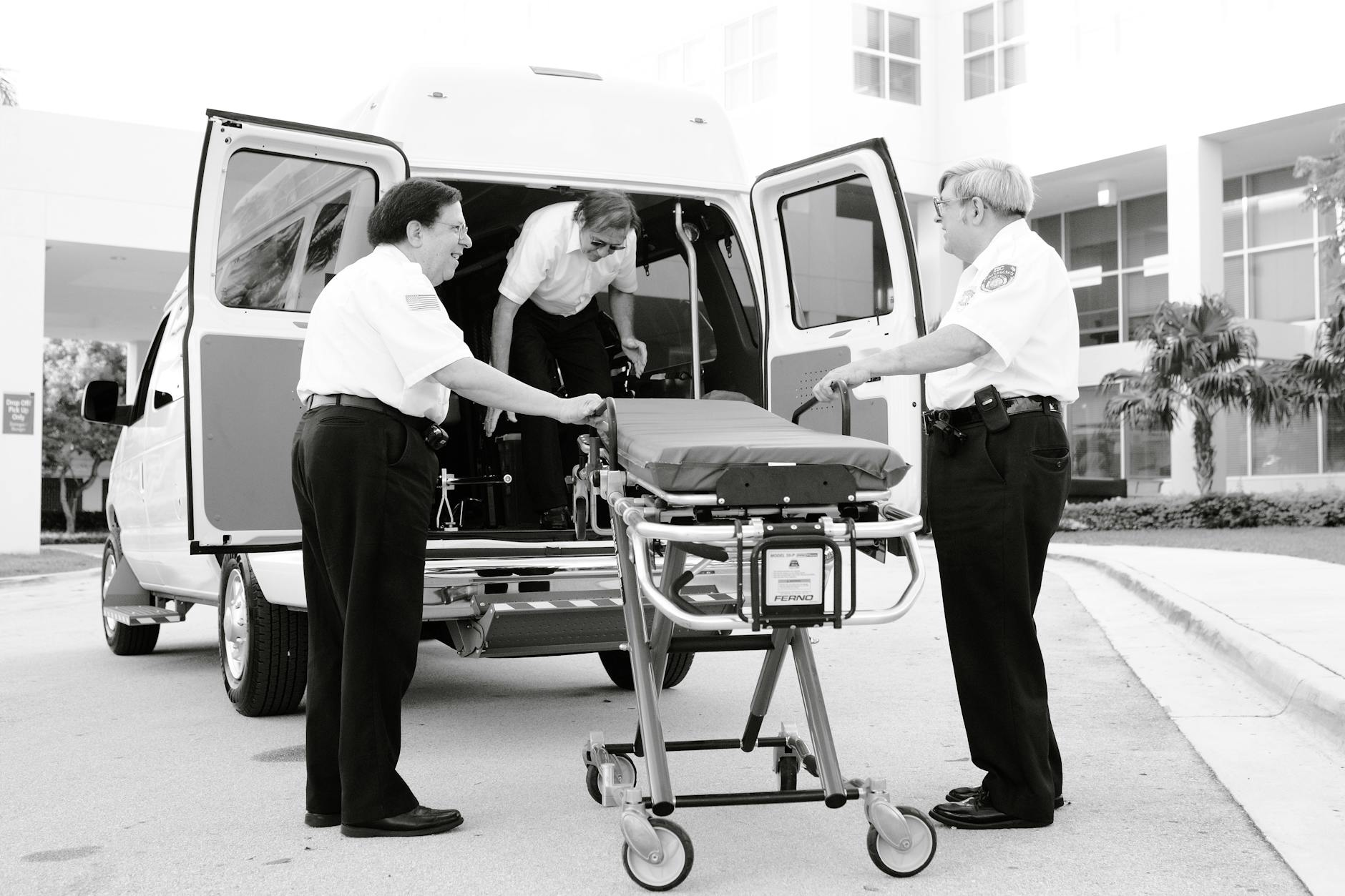
Call emergency help right away.
- 1669: Medical emergency / ambulance (widely used in Thailand).
- 191: General police emergency.
- 1155: Tourist Police (English support is commonly available).
-
Ask nearby staff for help. In Thailand, hotel staff, mall security, BTS/MRT staff, and 7-Eleven staff often help make calls or explain location details in Thai.
-
Share your location clearly. Send a map pin and describe landmarks (hotel name, intersection, station, beach, pier, temple).
Who to Call (and in What Order)
If injuries may be serious, call in this order:
- 1669 for urgent medical response.
- 191 if there is a collision, threat, dispute, or unsafe scene.
- 1155 Tourist Police for language support and coordination.
If you are stable but need help navigating hospitals, police paperwork, or translation, call 1155 early.
If It’s a Road Accident: What to Do at the Scene
Thailand has many scooters, fast traffic flow, and complex intersections. After a road accident:
- Do not argue at the roadside. Keep communication short and calm.
- Do not sign Thai-language documents you do not understand. Ask for translation support.
- Photograph evidence immediately (vehicles, plate numbers, injuries, road markings, traffic lights, weather, time).
- Exchange core details: name, phone, vehicle plate, rental company, insurer.
- Wait for police when needed, especially if injury or major damage is involved.
If you rented a car or motorbike, contact the rental provider as soon as you are safe. Many companies have a mandatory reporting process.

Hospital Step-by-Step: What Tourists Should Expect
Thailand has strong private hospitals in major tourist cities, but triage flow is usually the same: registration first, nurse assessment second, doctor consult after your chart is created.
At Admission
At intake, the registration desk commonly asks for:
- Passport (or passport photo page copy).
- Insurance card/policy details.
- Emergency contact person.
- Any medication/allergy information.
- A reachable phone number in Thailand (or hotel contact) for callbacks.
- Basic incident details: where it happened, when it happened, and whether police/ambulance were involved.
Payment and Insurance Reality
- Some hospitals ask for a deposit before non-life-threatening treatment.
- “Cashless” insurance approval may take time; keep funds/cards available if possible.
- Request itemized bills and medical reports from day one.
- Typical bottlenecks are: waiting for insurer pre-authorization emails, shift changes at billing counters, and delays when policy documents are incomplete or unreadable.
- If your condition is stable, treatment can pause between diagnostics and discharge until billing confirms payment method.
Before Discharge
Ask for:
- Diagnosis summary.
- Treatment notes.
- Prescriptions and receipts.
- Fit-to-fly or medical certificate if your itinerary may change.
These documents are often required for insurance claims and airline changes.
Police Report and Documentation Workflow
For accidents, theft during medical confusion, or major disputes, records matter.
Create one folder (cloud + phone) containing:
- Scene photos/videos.
- Hospital records and receipts.
- Police report copy/reference number.
- Transport receipts (ambulance, taxi to hospital).
- Communication logs (who you called, when, what was agreed).
Common paperwork failure points that delay claims:
- Receipt names do not match passport spelling.
- Missing doctor signature or hospital stamp on medical certificate.
- No police reference number for road incidents with third-party damage.
- Missing proof of payment (card slip/bank record) for large invoices.
Why this matters
Insurance claim outcomes often depend less on your story and more on your documentation timeline.
Travel Insurance: File Smart, File Early
Contact your insurer as soon as you are stable — ideally within the first 24 hours.
Tell them:
- Date/time/location of accident.
- Hospital name and treating doctor.
- Whether police were involved.
- Whether inpatient care or surgery was recommended.
Ask specifically:
- Is pre-approval required for continued treatment?
- Which documents are mandatory for reimbursement?
- Are translation/notarization steps needed?
- Does your policy cover medical evacuation or repatriation?
Keep every original receipt until your claim closes.
Thailand-Specific Location Tips
Emergency handling differs by where you are:
Bangkok
- Traffic can delay ambulances in peak hours.
- Ask staff to direct you to the nearest major hospital rather than searching while in transit.
- BTS/MRT stations are useful landmark references when calling for help.
Phuket / Samui / Krabi (Island & beach areas)
- Boat transfer or distance can slow hospital access.
- Share precise beach, pier, or resort names.
- For marine accidents, involve local authorities early and keep operator details.
Chiang Mai / Northern routes
- Mountain roads increase motorbike and van risk.
- In rural stretches, immediate first response may come from local volunteers before hospital transfer.
Festivals and nightlife zones
- Crowds, dehydration, and road incidents increase during major festivals.
- Set a meetup point with your group in advance and keep emergency contacts on your lock screen.
Add a Backup Lifeline: Download the Mestogo App Before Your Trip
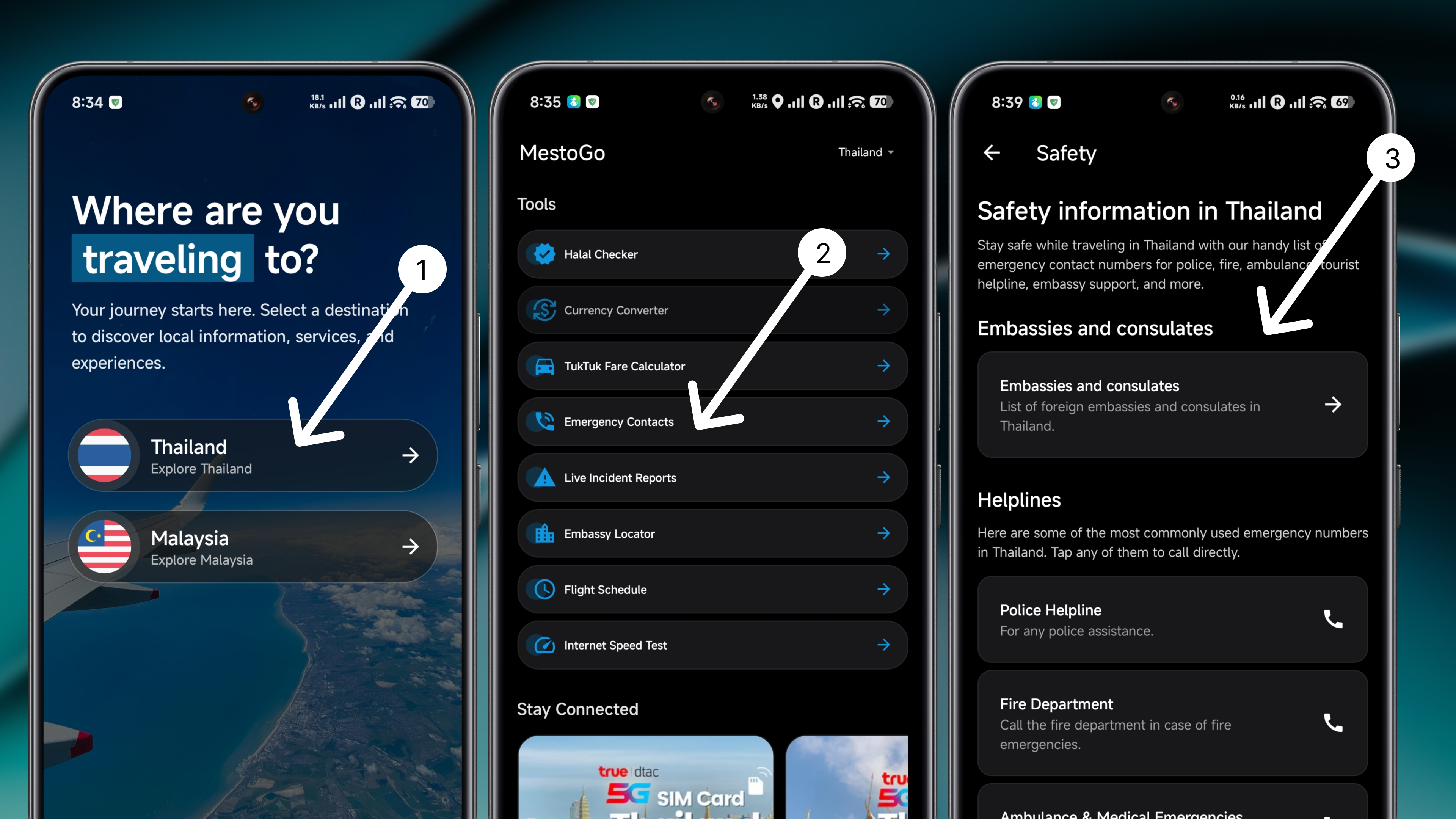
A practical way to reduce panic is to keep emergency contacts offline on your phone. Before you travel, download the Mestogo Thailand app so you can quickly access helplines such as medical emergency, fire services, Tourist Police, and embassy contacts even when your connection is weak.
- Web helplines directory: Mestogo Thailand Helplines
- iPhone (App Store): Download Mestogo for iOS
- Android (Google Play): Download Mestogo for Android
If you only do one prep task tonight, make it this: install the app, favorite key helplines, and keep them ready for one-tap access.
If You Are Traveling Alone
Set up a simple safety system now (before anything goes wrong):
- Save emergency numbers: 1669, 191, 1155.
- Add ICE contact in your phone.
- Keep passport copy + insurance PDF offline.
- Share live location with a trusted person when doing high-risk activities (scooter trips, boat tours, late-night transfers).
If hospitalized alone, ask staff to contact Tourist Police (1155) or your embassy/consulate for communication support. At many hospitals, asking for the international desk or interpreter support at registration speeds this up.
Embassy and Consular Support: What They Can and Can’t Do
Your embassy/consulate can usually help with:
- Contacting family/friends.
- Replacing lost travel documents.
- Providing lists of local lawyers/doctors/interpreters.
They usually cannot:
- Pay your hospital bills.
- Override local legal process.
- Act as your insurance company.
Use them for coordination, not as a first medical responder.
Practical Mistakes to Avoid
- Waiting too long to notify insurance.
- Losing small receipts (they add up and may be claimable).
- Posting blame statements online before police reporting is complete.
- Handing over passport originals unnecessarily (provide copies unless legally required).
- Assuming your home-country health plan works abroad.
- Leaving the hospital without checking that your name, passport number, and diagnosis date match across all documents.
Watch: First-Aid Basics Before Help Arrives
A One-Page Emergency Checklist (Save This)
If an accident happens in Thailand:
- Get to safety.
- Call 1669 (medical), 191 (police), 1155 (Tourist Police).
- Document scene and parties involved.
- Go to hospital; keep all reports and receipts.
- File police report where relevant.
- Notify insurer immediately.
- Inform family/emergency contact.
- Confirm follow-up care and fit-to-fly status before changing travel plans.
When you are prepared, emergencies become manageable steps instead of panic. Save this guide offline before your trip.
Related Articles

How Thailand's Halal Certification Really Works: What Travelers Can Trust, Check, and Still Need to Ask
A practical guide to Thailand's halal certification system for travelers who want to understand what the official mark means, how to verify products, and where certification still leaves gray areas.

Koh Samui Diving Safety: Essential Do's and Don'ts for a Safe Dive
Master scuba diving safety in Koh Samui with our essential guide covering critical do's and don'ts, from proper air management to dealing with strong currents at famous sites like Sail Rock.

Muslim-Friendly Travel in Thailand: How to Handle Halal Food, Prayer, and Hotels Without Guesswork
A practical Thailand guide for Muslim travelers who want less uncertainty around halal food, prayer stops, hotels, and day-to-day planning.
I Watched 3 Tourists Get Arrested at Songkran — Here's What They Did Wrong
Don't get arrested or fined during Songkran. Essential guide to Thai water festival laws, etiquette, dress code, alcohol rules, and the penalties that can ruin your trip.