
 ChatGPT
  Gemini
  Claude
  Perplexity
 The first thing that hits you is the noise. Before you even round the corner onto Dan Sai’s main street, you hear it — a chaotic jangle of cowbells, hand-carved wooden clappers, drums pounding out a rhythm older than memory, and beneath it all, a wave of human laughter. Then you see them: hundreds of figures in patchwork rags, their faces hidden behind enormous painted masks with grotesque grins, pointed teeth, and eyes that seem to follow you. They are dancing, stumbling, and chasing delighted children through the crowd. This is not Halloween. This is not a horror film. This is Phi Ta Khon — Thailand’s most joyfully bizarre festival — and you have just arrived at the party the dead refused to miss.
Welcome to Dan Sai, a sleepy district in the mountains of Loei Province, where once a year the boundary between the living and the spirit world grows wonderfully thin. Phi Ta Khon (pronounced “pee ta kon”) translates loosely to “Ghost Mask Festival,” but that clinical description sells it short. What unfolds here over three days is equal parts Buddhist merit-making ceremony, ancient animist ritual, rollicking street parade, and rocket festival — a cultural cocktail you will not find anywhere else on Earth.

The Legend: How a Homecoming Woke the Dead
Like all great festivals, Phi Ta Khon begins with a story. And this one is unforgettable.
The legend traces back to the previous life of the Buddha, when he was born as Prince Vessantara — a man so generous he gave away everything he owned, including his kingdom’s sacred white elephant and, eventually, his own children. His selflessness so angered his subjects that they banished him into the forest. Years later, the kingdom realized its mistake and begged the prince to return.
The news of Vessantara’s homecoming spread like wildfire. The villagers of Dan Sai were so overjoyed — so deafeningly, earth-shakingly happy — that their celebrations roused the dead from their graves. The ghosts, curious about the commotion and not wanting to miss a good time, rose up and joined the parade. Nobody panicked. Nobody fled. The living and the dead simply celebrated together, and the tradition was born.
That is the story the people of Dan Sai tell, and they have been reenacting it for centuries. The elaborate ghost masks represent those long-ago spirits who crashed the welcome-home party. The festival itself is officially called Bun Luang — a merit-making ceremony tied to the Buddhist temple — but everyone simply calls it Phi Ta Khon, because the ghosts are what you remember.
When the Festival Happens: Reading the Spirits’ Calendar
Phi Ta Khon does not follow the tidy Gregorian calendar. The dates are determined each year by the village’s spirit mediums and shamans, who consult the spirits and the lunar calendar to choose an auspicious window. The festival typically falls in June or July, corresponding with the sixth or seventh lunar month, and coincides with the Buddhist holiday of Bun Phra Wet — a celebration of the Vessantara Jataka tale.
The festival spans three days, usually wrapping around a weekend. Because the dates shift annually and are announced only a few months ahead, you will need to keep an eye on the Tourism Authority of Thailand’s Loei office or local news outlets. For 2026, expect it sometime between mid-June and mid-July. When dates are confirmed, book your accommodation in Dan Sai immediately — rooms in the small town vanish fast.
The Ghost Masks: Coconut Leaves and Grinning Nightmares
The masks are the soul of Phi Ta Khon, and they are unlike anything else in Thai folk art.
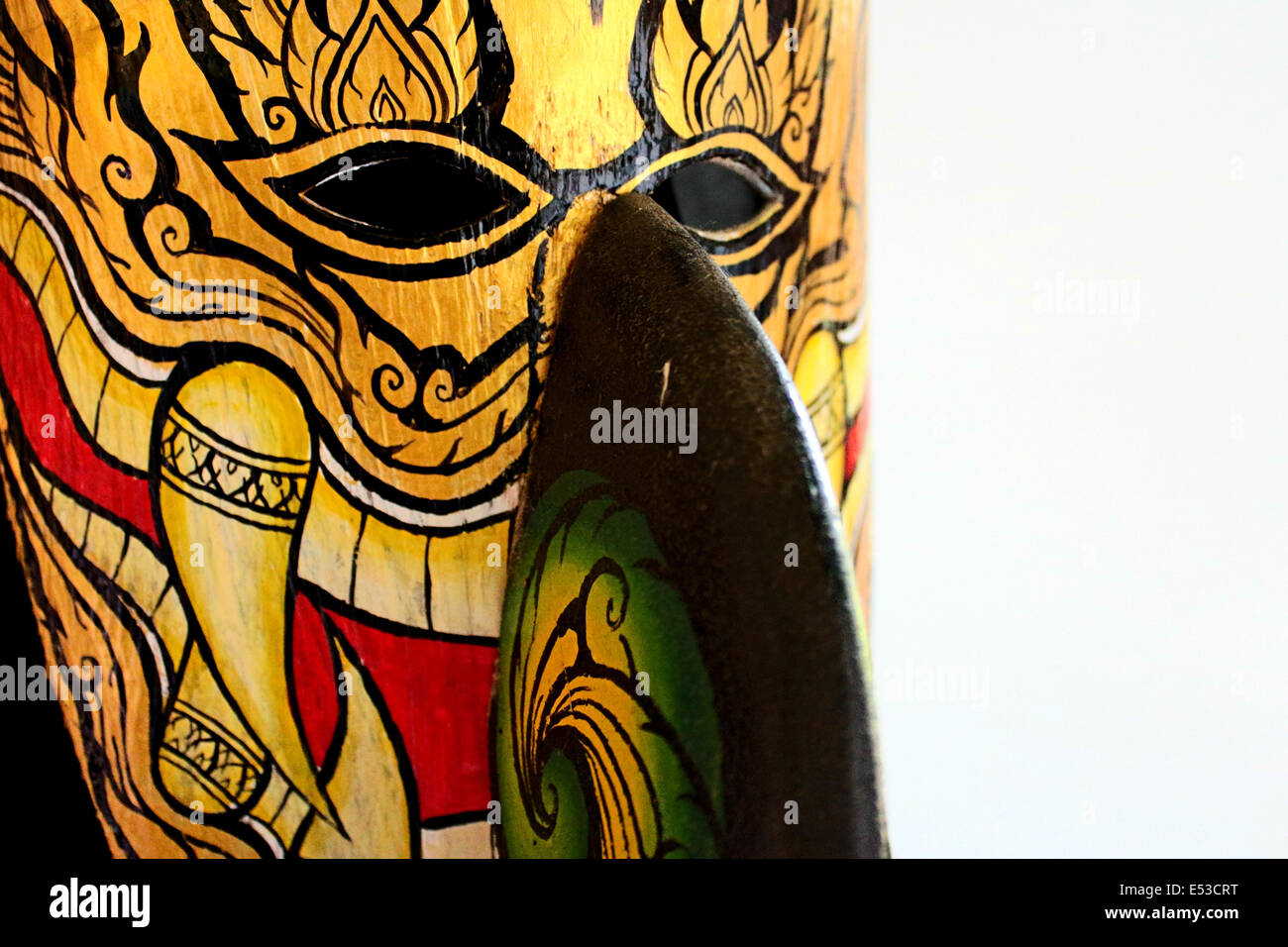
Each mask begins with a coconut palm leaf spathe — the tough, fibrous sheath that protects the base of a coconut frond. Artisans carve the spathe into a face shape, hollowing out eye and mouth holes, then build a towering headpiece onto it using steamed bamboo strips and folded palm leaves. The result is a mask that can stand two feet tall, with a long pointed nose, exaggerated cheekbones, and a leering, toothy grin that manages to be both terrifying and oddly friendly.
Once shaped, the mask is painted in riotous color — acid greens, blood reds, electric yellows, and deep blues — often with intricate floral or geometric patterns. Some masks depict recognizable characters: grinning demons, village elders, hunters, or comic caricatures. No two masks are identical, and the best ones are genuine works of folk art traded between villages and passed down through families.
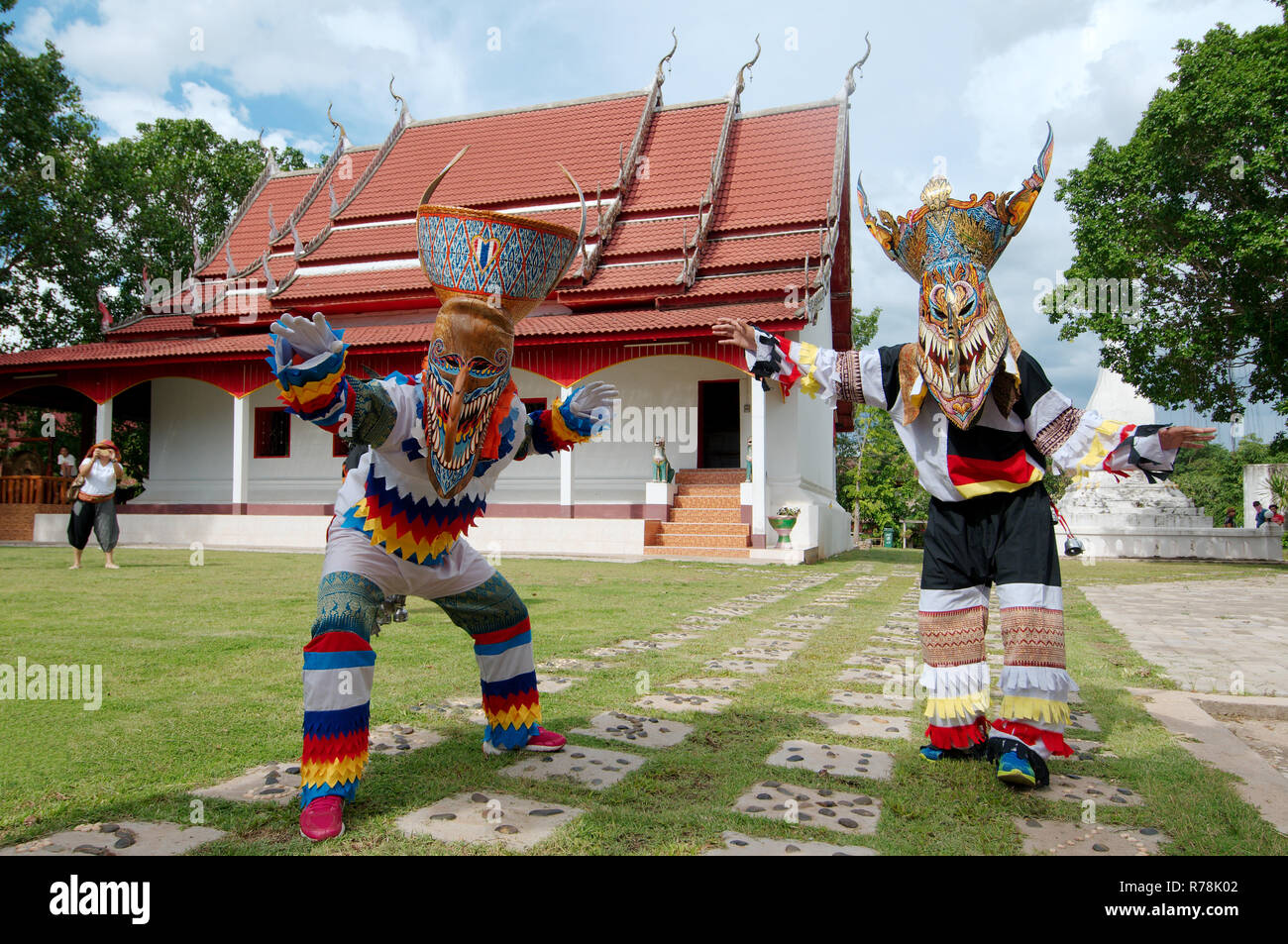
Alongside the mask, participants wear patchwork costumes stitched together from scraps of old clothing, rags, and discarded fabric. Strings of cowbells are tied around waists and ankles, creating that distinctive jangling soundtrack as the ghosts dance through the streets. Some carry wooden spirit swords or phallic-shaped staffs (palad khik) as fertility symbols — a reminder that Phi Ta Khon is, among other things, a rain-making and harvest festival.
Day by Day: The Three-Day Festival Breakdown
Day One: The Ghost Parade (Wan Ruam)
The festival kicks off with the main event — the Phi Ta Khon parade. Starting from the banks of the Man River, hundreds of costumed ghosts gather and process through the narrow streets toward Wat Phon Chai, the town’s principal temple. The parade route winds roughly two kilometers through Dan Sai, and the ghosts do not walk so much as they swagger, stumble, and dance. They chase squealing children, pose for photographs, and occasionally break into impromptu comic skits.
The energy is mischievous rather than menacing. This is a festival about joy, not fear. Locals line the streets with water buckets, food stalls, and folding chairs. The parade culminates at the temple grounds, where a ceremonial opening invokes the spirits and officially begins the Bun Luang merit-making ceremonies.
Day Two: Rockets, More Parades, and Dance (Wan Sorn)
Day two ramps up the spectacle. The ghost parade continues with fresh costumes and participants, but the main draw becomes the Bang Fai rocket competition — a raucous tradition shared with northeastern Thailand’s broader Rocket Festival culture. Teams launch homemade bamboo-and-powder rockets into the sky, competing for height, distance, and crowd approval. The rockets are meant to awaken the sky spirits and encourage the monsoon rains to arrive on time.
Throughout the day, traditional northeastern Thai music and dance performances fill the temple grounds. Mor lam — the hypnotic, driving folk music of the Isaan region — blasts from speakers while dancers in traditional pha sin skirts perform for crowds that spill from the temple into the streets. Food stalls selling grilled chicken, sticky rice, and papaya salad turn the entire temple compound into an open-air feast.
Day Three: Buddhist Sermons and Blessings (Wan Phra Wet)
The final day shifts from carnival to contemplation. The ghosts mostly disappear, the rockets fall silent, and the festival returns to its spiritual roots. Monks at Wat Phon Chai deliver sermons recounting the story of Prince Vessantara — the full thirteen-chapter Jataka tale that inspired the festival. Locals make merit by offering food, robes, and other necessities to the monks. It is a quieter, more intimate day, and for travelers who stay, it offers a rare window into rural Thai Buddhist practice unvarnished by tourism.
How to Get to Dan Sai, Loei
Dan Sai is remote — and that is precisely its charm. Getting there takes some effort, but the journey through northeastern Thailand’s rolling mountains is part of the experience.
By air: Fly from Bangkok’s Don Mueang Airport (DMK) to Loei Airport (LOE). AirAsia and Nok Air operate daily flights; the journey takes about one hour and fifteen minutes. From Loei Airport, Dan Sai is roughly an 80-kilometer drive. You can hire a taxi or songthaew (shared truck taxi) at the airport for approximately 800 to 1,200 baht. Plan on about 90 minutes on winding mountain roads. Rent a car at Loei Airport if you plan to explore the province afterward.
By bus: From Bangkok’s Mo Chit Bus Terminal, buses to Loei depart throughout the day. The trip takes approximately 8 to 10 hours, depending on the route. Overnight VIP buses are the most comfortable option — book a seat that reclines fully and catch some sleep. From Loei town bus station, take a local songthaew to Dan Sai (about two hours, 50 to 80 baht). Bus travel during festival season fills up — book your ticket a few days in advance at the terminal or through your accommodation.
Combined approach: For the most efficient route, fly from Bangkok to Loei, rent a car at the airport, and drive yourself. The roads are well-maintained, sinuous through forested hills, and see very little traffic outside festival days.

Practical Tips for Phi Ta Khon
Book your stay painfully early. Dan Sai has perhaps a dozen guesthouses and small hotels. During Phi Ta Khon, every room fills with Thai tourists, photographers, and a growing number of international visitors. Book months ahead if possible. If Dan Sai is fully booked, look at accommodation in Loei town — it is a two-hour drive each way but far more options are available.
Pack for the weather. June and July fall squarely in Thailand’s rainy season. Bring a lightweight rain jacket, a waterproof bag for your camera gear, and shoes you do not mind getting muddy. That said, the rain often comes in brief afternoon bursts — mornings are frequently bright and ideal for the parade.
Protect your ears. When the bamboo rockets launch, they are loud. If you have sensitive hearing or are bringing children, consider foam earplugs. The ghost parade with its hundreds of cowbells and clappers is a roar of joyful noise.
Ask before photographing. The people of Dan Sai are warm and welcoming, and most participants are delighted to pose for photos. Still, a smile and a gesture of asking goes a long way — especially with elderly mask-makers working at their craft.
Bring cash in small denominations. Dan Sai is a cash economy. The nearest ATM is in the town center, but it can run out of money during the festival. Stock up on 100-baht and 500-baht notes in Loei before you arrive.
Try the local food. Isaan cuisine dominates here, and it is spectacular. Seek out kai kratha (sizzling egg pan with sausage), sai krok Isaan (fermented pork sausage), and fiercely spicy som tam (papaya salad). Wash it all down with sticky rice and an ice-cold bottle of Leo beer.
Learn a few Isaan phrases. While standard Thai works everywhere, a few words in the local dialect earn glowing smiles. Try saying sabai dee bo? (“How are you?”) — the Isaan version of sabai dee mai?
What Else to See in Loei Province
If you have come all the way to Loei for Phi Ta Khon, give yourself a few extra days to explore. This province is one of Thailand’s most underrated, and the contrast between the festival’s chaos and the surrounding landscape’s serenity is part of the magic.
Phu Kradueng National Park
Roughly 90 kilometers south of Dan Sai, Phu Kradueng is a flat-topped mountain revered by Thai hikers as a kind of pilgrimage. The summit plateau — reached by a strenuous 5.5-kilometer climb — opens onto pine forests, cliffside viewpoints, waterfalls, and sprawling meadows. During the rainy season, the plateau bursts into wildflowers, and the sunrise view from Pha Nok Aen cliff is reason enough to make the climb. The park is open for hiking from October through May and closes during the heaviest monsoon months (usually June through September), so check seasonal access before planning.
Chiang Khan
About 120 kilometers north of Dan Sai along the Mekong River, Chiang Khan is a riverside town that feels frozen in time. Its main street, lined with century-old wooden shophouses, is a living museum of traditional Isaan architecture. In the early morning, the street hosts a monk alms-giving ceremony where locals kneel along the roadside offering sticky rice. Come evening, the Walking Street night market fills with handicrafts, vintage clothing, and riverside restaurants serving Mekong fish grilled with lemongrass. Chiang Khan makes an ideal two-day add-on before or after the festival.
Phu Rua National Park
Closer to Dan Sai, Phu Rua offers easier hiking than Phu Kradueng but equally rewarding views. The name means “Boat Mountain” for its distinctive shape, and on clear winter mornings, you can see all the way to Laos. The summit area stays cool year-round — a rarity in Thailand — and the park’s flower gardens attract photographers during the cool season.
Why Phi Ta Khon Belongs on Your Radar
Thailand has no shortage of world-famous festivals. Songkran delivers the world’s biggest water fight. Loy Krathong fills rivers with candlelight. But Phi Ta Khon exists in its own category — a festival so deeply tied to one small community that it cannot be replicated, packaged, or watered down for mass tourism. It remains, stubbornly and wonderfully, a local affair.
When you stand on the dusty streets of Dan Sai as hundreds of ghosts dance past, cowbells clanging, masks grinning, and rockets screaming toward the monsoon clouds, you understand something about Thailand that the guidebooks rarely capture: here, the sacred and the silly, the ancient and the immediate, the living and the dead, all share the same street. And somehow, it makes perfect sense.
You may also like
- Boon Bang Fai: Thailand’s Wild Rocket Festival in Isaan
- Songkran Water Festival: Everything You Need to Know
- Loy Krathong: Thailand’s Magical Festival of Lights
- Bo Sang Umbrella Festival: Chiang Mai’s Most Colorful Craft Celebration
- Thai Buddhist Festival Etiquette: How to Observe Sacred Days Respectfully
- Thailand Festivals Calendar: Plan Your Trip Around Every Major Event
Related Articles
Three Days, One Million Petals: The Thai Festival That Outdoes Pasadena's Rose Parade
Experience the breathtaking Chiang Mai Flower Festival with elaborate floral floats, beauty pageants, and stunning garden displays. Plan your visit for Thailand's most beautiful botanical celebration.
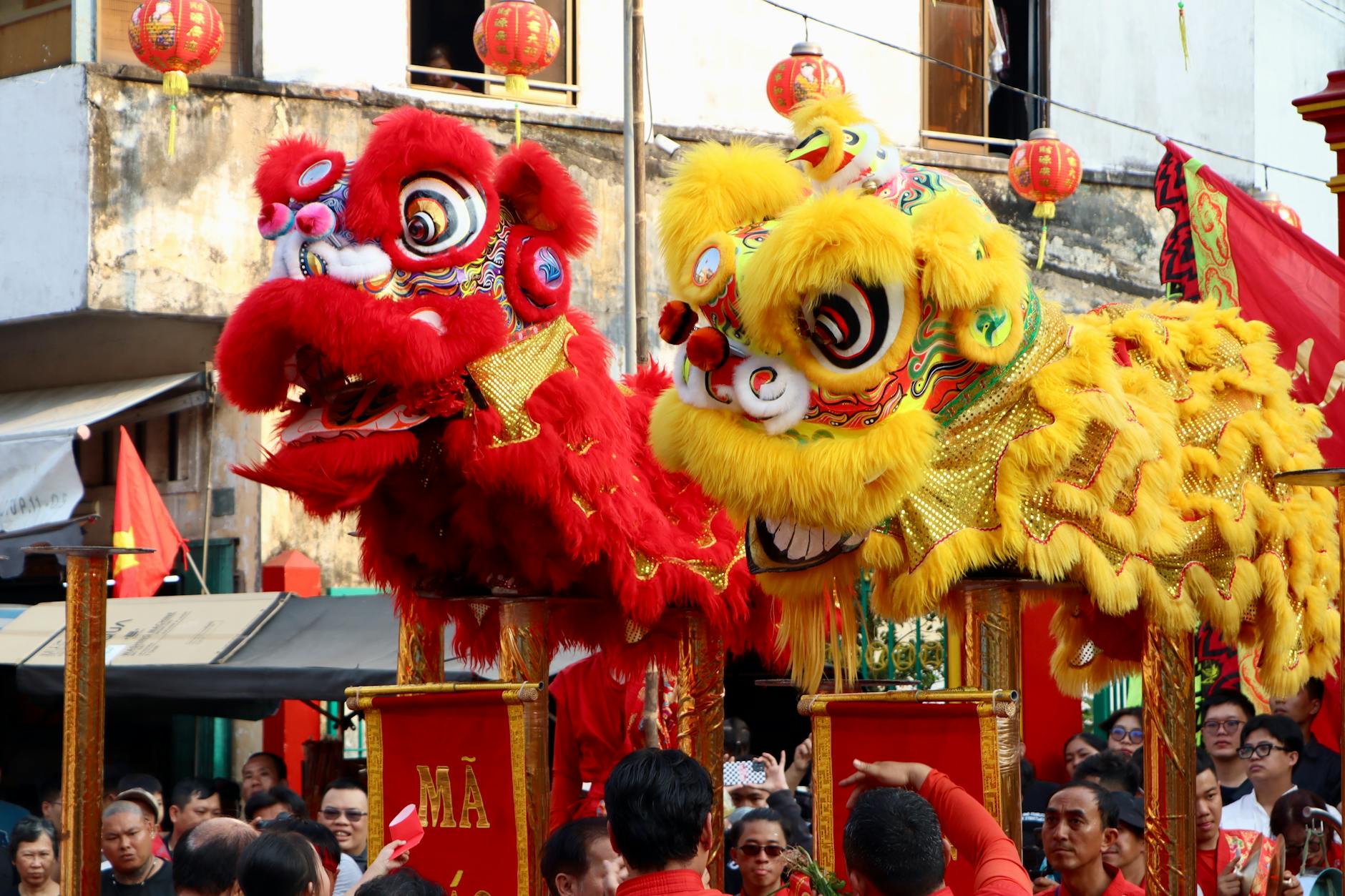
I Stood in Chinatown as a 40-Foot Dragon Weaved Past Me — Here's Why Lunar New Year in Thailand Feels Different From Anywhere Else
Celebrate Chinese New Year in Thailand with vibrant parades, lion dances, and feasts. Discover Bangkok's Chinatown, Phuket's Old Town, and the best Chinese temples for an unforgettable lunar new year.
100,000 Candles and Zero Noise: The Most Unfathomable Night I've Spent in Thailand
Experience the King's Birthday in Thailand — a national celebration of monarchy, fatherhood, and unity. Yellow seas of loyal well-wishers, candlelit ceremonies, and Bangkok's grandest displays.
When Sacred Oxen Predict the Harvest: Bangkok's 700-Year-Old Ploughing Ceremony
Discover the Royal Ploughing Ceremony, Thailand's ancient Brahmin ritual marking the start of rice planting season. Watch sacred oxen predict the harvest at Bangkok's Sanam Luang.