
 ChatGPT
  Gemini
  Claude
  Perplexity
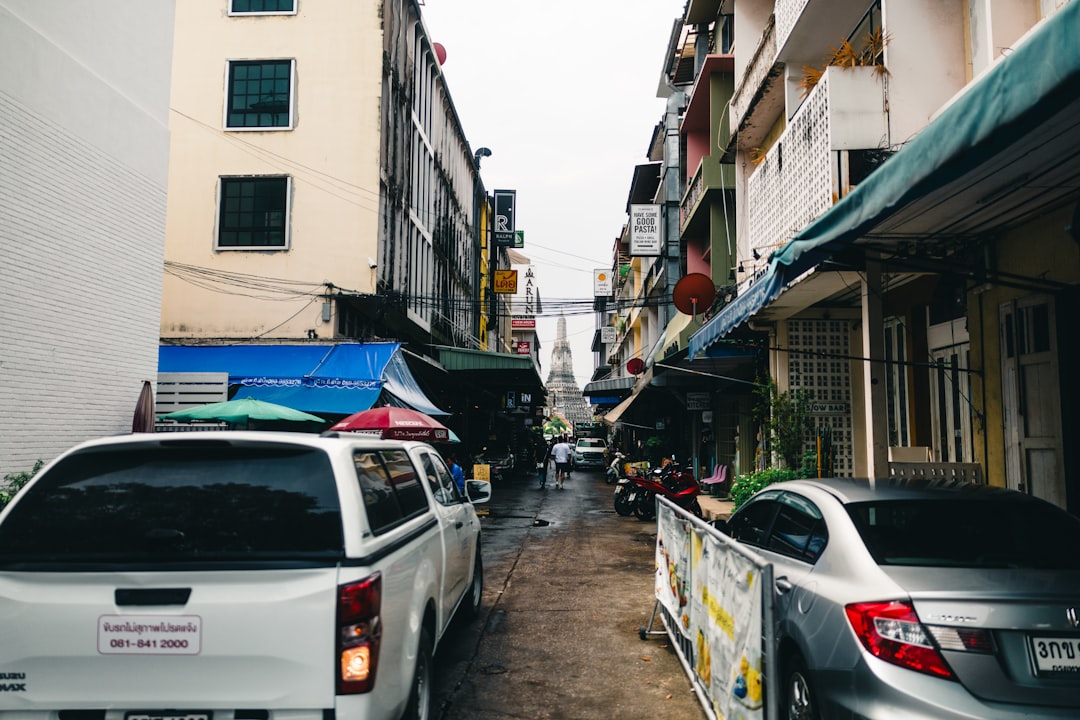
 If you’re staying in Bangkok with access to a kitchen and have any interest in cooking Thai food yourself, Khlong Toei Market is the single most important place you’ll visit. This is not a polished tourist market with overpriced souvenirs and Instagram backdrops. This is Bangkok’s kitchen — the sprawling, chaotic, 24-hour nerve center where street food vendors, five-star hotel chefs, and local grandmothers all buy their ingredients.
CNN listed it as one of Bangkok’s most authentic markets. If you’ve eaten a meal in this city, chances are the ingredients passed through here first.
Why Khlong Toei Instead of Supermarkets?
Price. A kilo of strawberries for 25 baht. Fresh prawns for 160 baht per kilo. A bundle of holy basil for 5 baht. You’ll pay a fraction of supermarket prices for dramatically fresher ingredients.
Variety. No supermarket carries the full range of Thai produce. Where else will you find five types of basil, fresh turmeric root, green peppercorns on the vine, and live crabs in one stop?
Experience. Shopping here is an education in Thai cuisine. You’ll see ingredients you’ve never encountered and discover how locals actually cook.
Getting There
The market sits at the corner of Rama IV and Rama III Roads. Take the MRT Blue Line to either:
- Queen Sirikit National Convention Centre Station — Exit 1, then a 5-10 minute walk south across the pedestrian bridge
- Khlong Toei Station — Exit 4, then a 10-15 minute walk or short motorbike taxi ride
Both stations drop you within easy walking distance. A tuk-tuk from Sukhumvit costs around 80-100 baht.
When to Go
The market operates 24 hours but the experience changes dramatically by time:
| Time | What’s Happening | Best For |
|---|---|---|
| 4:00 AM - 8:00 AM | Peak wholesale. Trucks arrive, vendors stock stalls, maximum selection | Freshest produce and seafood |
| 8:00 AM - 12:00 PM | Busy but manageable. Best balance for tourist shoppers | General shopping |
| 12:00 PM - 5:00 PM | Quieter, some stalls wind down | Casual exploration |
| 10:00 PM - 2:00 AM | Wholesale trade restarts for restaurants | Late-night spectacle |
Go early. Arrive by 7:00 AM for the best selection, coolest temperatures, and most energetic atmosphere. Weekdays are less crowded than weekends.
What to Bring
- Cash. Small bills (20, 50, 100 baht). Cards are not accepted.
- Closed-toe shoes. The floor is wet with fish water and ice melt. Do not wear your nice sneakers or flip-flops.
- Reusable bags. Bring your own or buy large plastic bags from vendors for a few baht.
- Face mask. The meat and seafood sections have strong odors that can be overwhelming.
- Water bottle. It gets hot.
The Market Section by Section
Vegetables and Herbs
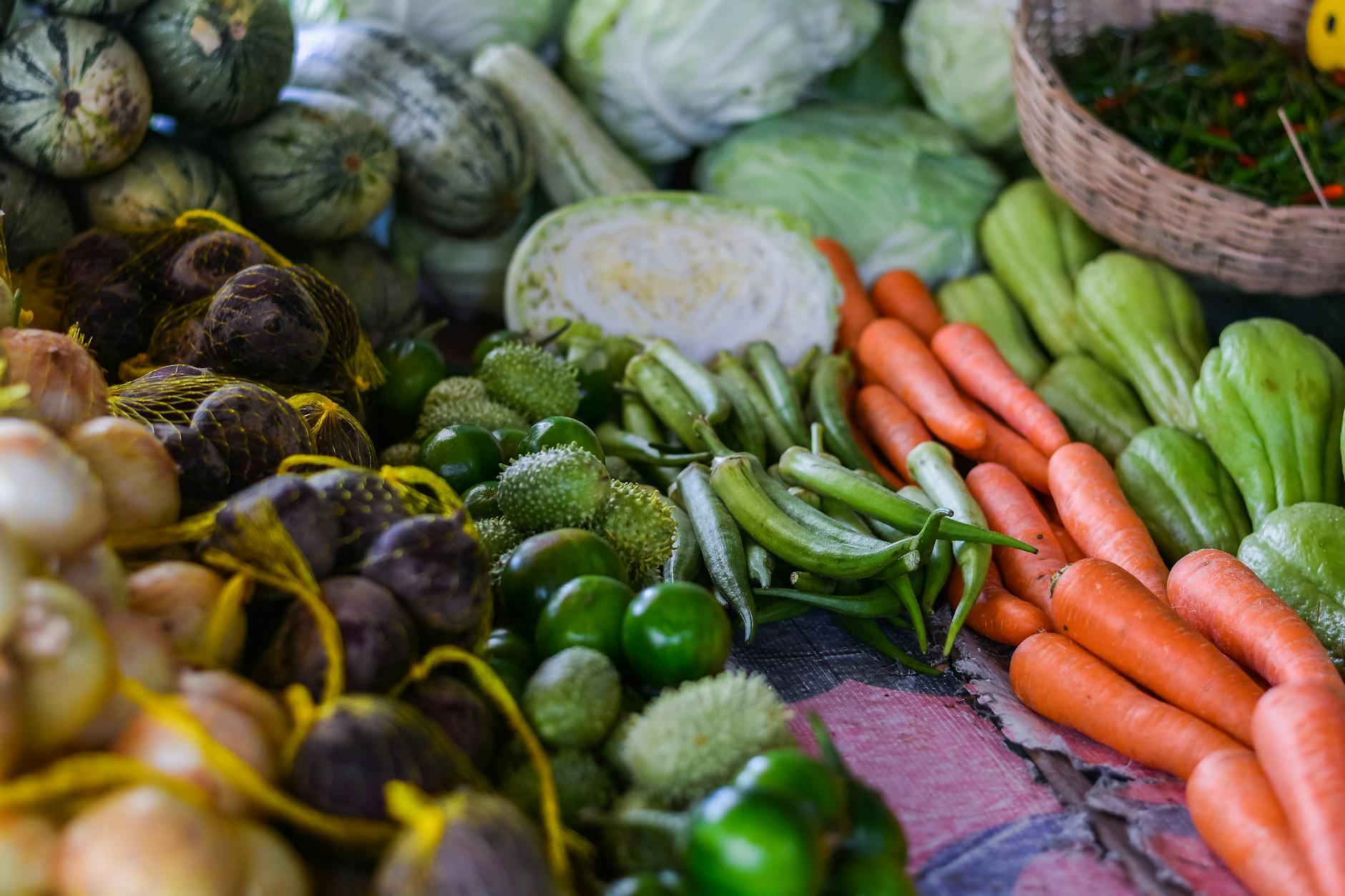
This is where you’ll spend the most time as a home cook. Stalls overflow with Thai essentials you simply cannot find in Western supermarkets:
- Holy basil (bai gaprow) and sweet basil (bai horapa) — 5-10 baht per bundle
- Lemongrass — 5 baht per stalk
- Galangal and ginger — 20-40 baht per kilo
- Kaffir lime leaves — 10 baht per bag
- Bird’s eye chilies (prik kee noo) — 20 baht per kilo
- Fresh turmeric root — 30 baht per kilo
- Shallots and garlic — 30-50 baht per kilo
- Green papaya for som tum — 15-20 baht each
- Long beans, Thai eggplant, bamboo shoots — 20-40 baht per kilo
Pro tip: Most vegetable vendors open by 5:00 AM and have the best stock before 9:00 AM.
Fruit Section
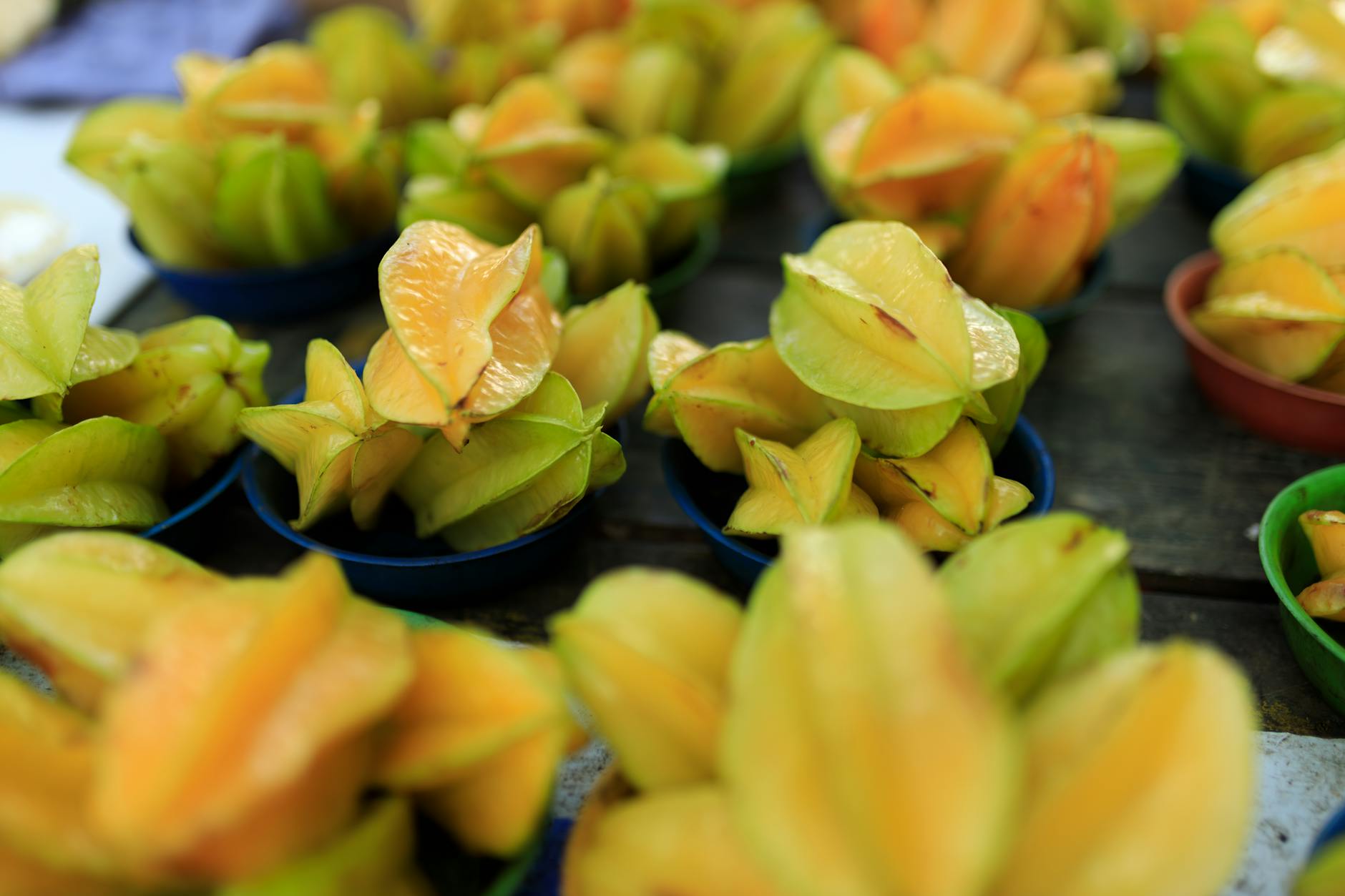
A kaleidoscope of tropical fruit at prices that make supermarket shopping feel like a scam:
- Mangoes (ripe and green) — 30-60 baht per kilo
- Mangosteen — 40-80 baht per kilo
- Dragon fruit — 50 baht per kilo
- Rambutan — 30-50 baht per kilo
- Durian — 100-200 baht per kilo (seasonal)
- Watermelon — 20-30 baht for a whole fruit
- Pomelo — 30-50 baht each
- Rose apples, guava, tamarind — 20-40 baht per kilo
Vendors will happily let you taste before you buy.
Seafood
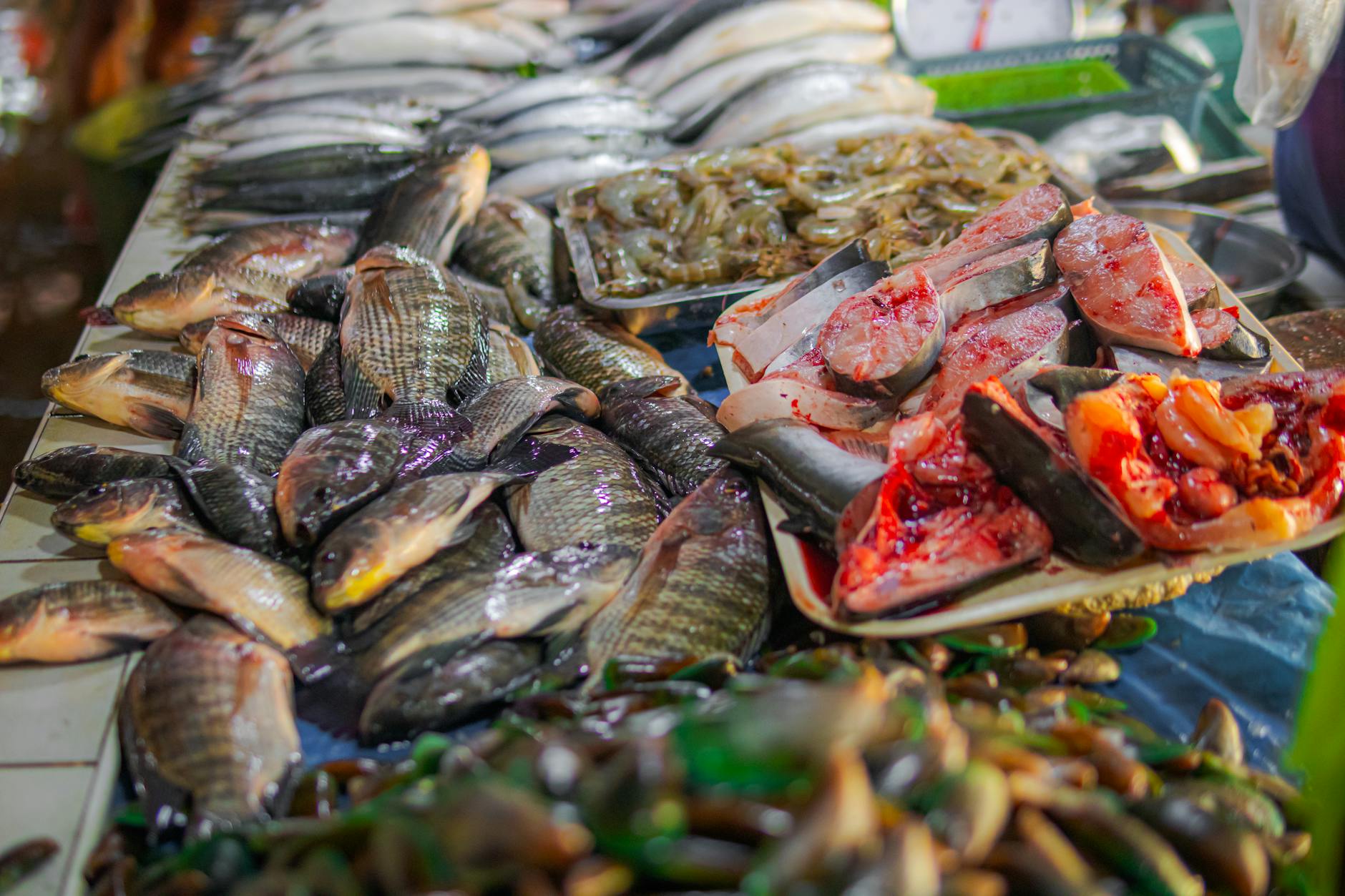
The seafood section is visceral and unforgettable. Fish are still flapping on ice-covered tables. Vendors splash water freely — another reason for closed shoes.
- Whole fish (snapper, mackerel, catfish) — 40-100 baht each
- Fresh prawns — 160-360 baht per kilo depending on size
- Squid and cuttlefish — 80-150 baht per kilo
- Crabs — 120-250 baht per kilo
- Mussels and clams — 30-60 baht per kilo
Bring a cooler bag if you’re buying seafood and not heading straight home.
Meat
This section is raw in every sense. Whole animals, offal, blood — nothing is hidden. If you’re easily squeamish, skip directly to the herb section.
- Chicken (whole) — 80 baht per kilo
- Chicken breast or thigh — 60-100 baht per kilo
- Pork ribs — 120 baht per kilo
- Pork belly — 100-150 baht per kilo
- Beef — 200-250 baht per kilo
- Duck — 100-150 baht each
Dried Goods and Curry Pastes
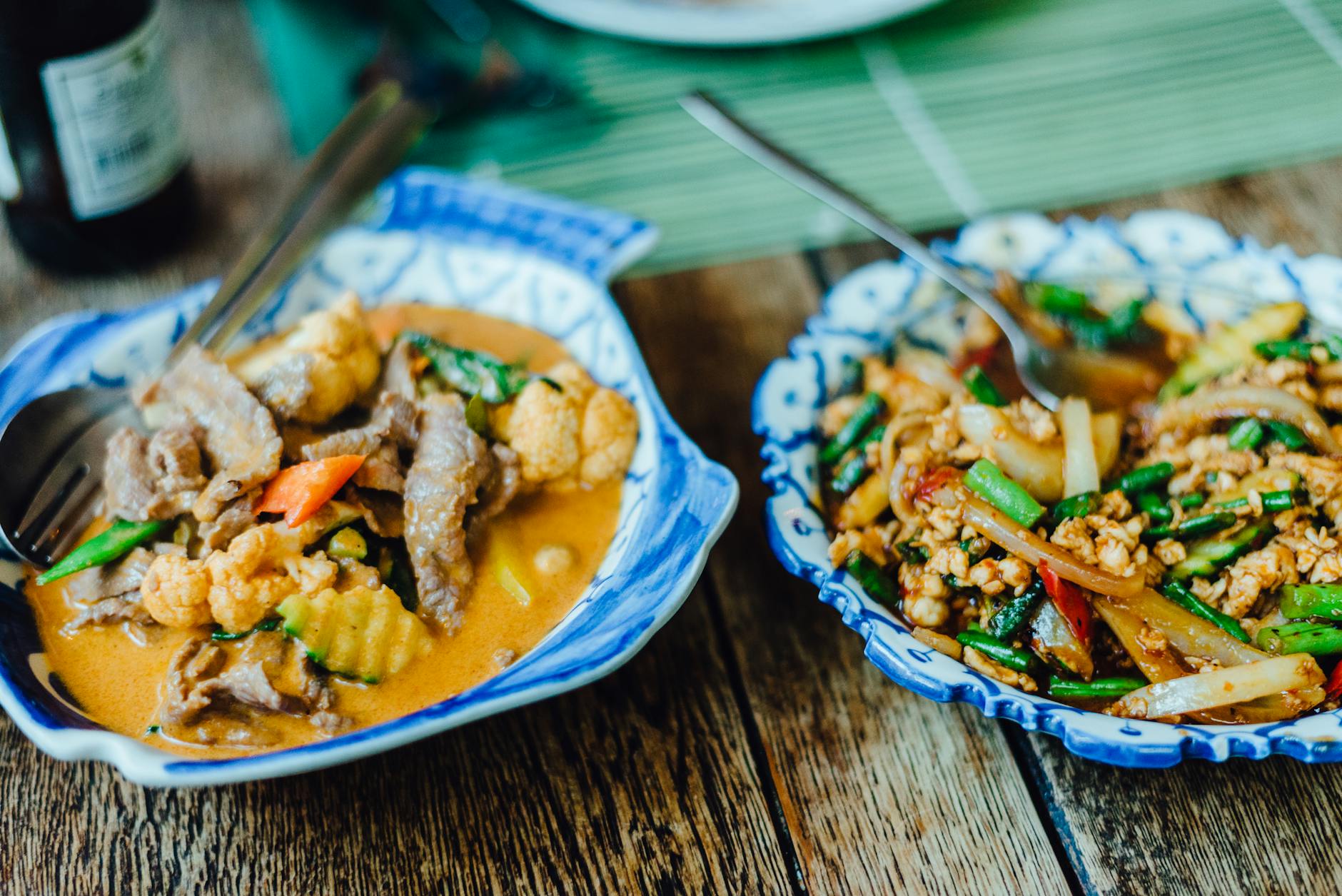
This section is a goldmine for the home cook. You’ll find pre-made curry pastes that beat anything in jars back home:
- Red, green, yellow, and panang curry pastes — 20-40 baht per bag
- Shrimp paste (kapi) — 30-60 baht per jar
- Fish sauce and oyster sauce — 20-50 baht per bottle
- Coconut milk (freshly pressed) — 40-60 baht per bag
- Dried chilies and spices — 10-30 baht per bag
- Jasmine rice — 30-50 baht per kilo
Kitchenware and Equipment
The alleyways surrounding the main market are lined with vendors selling cookware:
- Mortar and pestle (stone or clay) — 150-400 baht
- Carbon steel woks — 200-500 baht
- Bamboo steamers — 60-200 baht
- Clay pots for cooking — 100-300 baht
- Coconut scrapers and vegetable peelers — 30-80 baht
This is where to buy proper tools for making Thai food at home.
Street Food Inside the Market
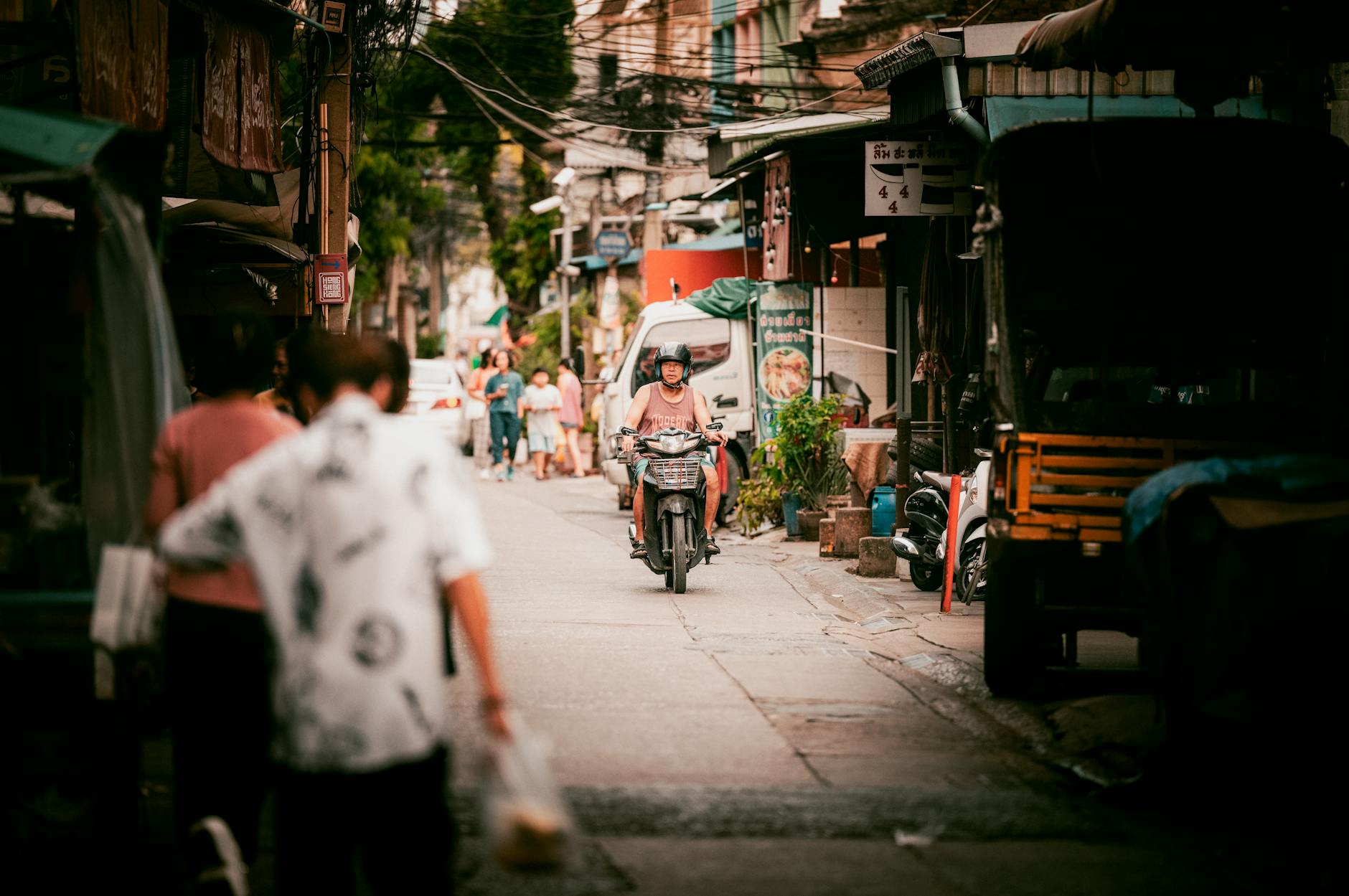
You will get hungry. The market has excellent street food stalls, particularly around the perimeter. Look for:
- Roti sai mai (Thai cotton candy wrapped in roti) — a local specialty
- Grilled meat skewers — 10-20 baht each
- Fresh fruit smoothies and Thai milk tea — 20-40 baht
- Khao lam (sticky rice in bamboo) — 20-30 baht
- Noodle soup bowls — 40-60 baht
These stalls mostly cater to vendors and workers, so prices are rock bottom and quality is high.
How Much to Budget for Cooking
Here’s what a serious Thai cooking haul looks like at Khlong Toei prices:
| Ingredient | Amount | Cost (Baht) |
|---|---|---|
| Jasmine rice | 1 kg | 40 |
| Curry paste | 2 packs | 60 |
| Coconut milk | 2 bags | 100 |
| Chicken thigh | 500g | 50 |
| Prawns | 300g | 100 |
| Holy basil | 2 bundles | 10 |
| Chilies, garlic, shallots | Assorted | 40 |
| Fish sauce, oyster sauce | 2 bottles | 60 |
| Vegetables (long beans, eggplant) | Mixed | 30 |
| Fresh fruit | 1 kg mangoes | 50 |
| Total |
That’s enough to cook several Thai meals and snack on fruit for days.
Cooking Classes That Start Here
Several Bangkok cooking schools include a Khlong Toei market tour as part of their program. You visit the market with a chef who explains ingredients, then cook at a nearby studio:
- Cooking with Poo — Run by a Khlong Toei local, includes a market walk
- House of Taste — Market tour + Thai cooking in a Sukhumvit studio
- Baipai Thai Cooking School — Premium experience with market visit
If you book one of these, skip breakfast — the market portion includes tastings.
Practical Tips
Haggling isn’t expected on fresh food. Prices are already the lowest in the city. Bargaining is more appropriate for non-food items like kitchenware or clothing.
Watch for motorbikes. Vendors and porters weave through the narrow aisles carrying stacked crates. Step aside when you hear an engine.
Photography is welcome. Vendors are generally happy to be photographed, especially if you buy something or at least smile and wave.
Don’t come hungover. CNN warned about this for good reason — the meat section is confronting even on a clear head.
Take a cooking class first. If you’re unsure what to buy, take a market-tour cooking class on your first day. You’ll learn what ingredients matter and where to find them, then return independently for serious shopping.
Quick Reference
- Address: Corner of Rama IV and Rama III Roads, Khlong Toei
- MRT: Queen Sirikit Convention Centre (Exit 1) or Khlong Toei (Exit 4)
- Hours: 24 hours (best for tourists: 6:00 AM - 11:00 AM)
- Cash needed: Yes, small bills
- Bags: Bring your own or buy at market
- Entry fee: Free
Khlong Toei Market is not comfortable. It’s hot, loud, wet, and smelly. But if you want to cook real Thai food with real Thai ingredients at real Thai prices, there is no better place in Bangkok.
Related Articles
The Bangkok MRT Rules Tourists Keep Breaking (Without Knowing)
Master Bangkok's MRT with our etiquette guide. Learn queueing rules, seat etiquette, noise policies, and rush hour tips for a smooth, respectful ride.
Durian Mooncakes and Paper Lanterns: A Night in Bangkok's Most Intimate Festival
Discover how Thailand celebrates the Mid-Autumn Festival with mooncakes, lantern displays, and cultural events in Bangkok's Chinatown and beyond. A beautiful blend of Chinese and Thai traditions.
12 Pet-Friendly Restaurants in Bangkok Where Dogs Are Actually Welcome
From laid-back brunch patios in Thonglor to garden dining in Sathorn, these Bangkok restaurants and cafes welcome pets with shaded outdoor seating, water bowls, and an easygoing vibe.
Pokémon Center BANGKOK Is Coming: Thailand's First Official Pokémon Store Opens at CentralWorld
Pokémon Thailand and Central Pattana announce the first Pokémon Center in Thailand, opening at CentralWorld in 2026. What to expect, how to get there, and why this matters for fans and collectors.